Political Bargains in Exchange for Votes: A “Parallel Theory” Between Japan’s LDP and South Korea’s People Power Party
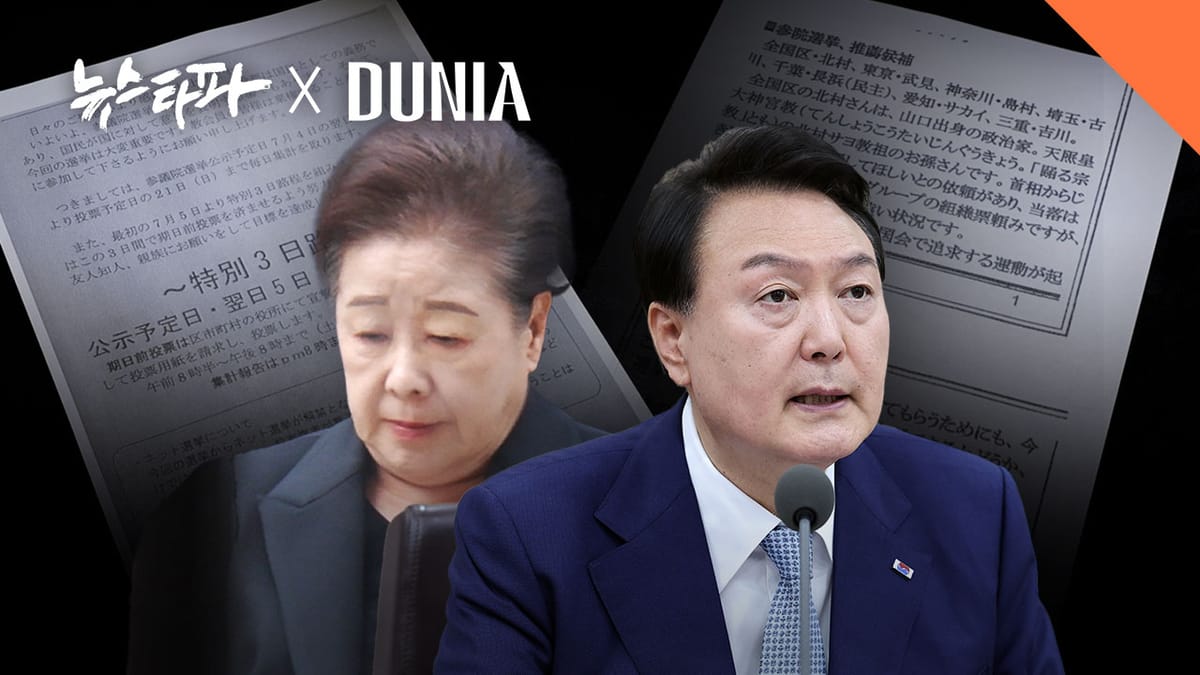
This article is a joint investigation by the Korea Center for Investigative Journalism–Newstapa and the Asia-focused investigative reporting outlet Dunia. Dunia is an independent newsroom launched through Newstapa and the Newstapa Together Foundation’s “100 Independent Newsrooms Project” and the Newstapa Journalism School (Newschool). Through the Newschool Project, Newstapa has organized the Korea Independent News Network (KINN) together with independent newsrooms spawned by the program, fostering solidarity and collaboration. Editor’s note.
Growing evidence shows that the Unification Church (formally, the Family Federation for World Peace and Unification) and political forces aligned with Yoon Suk-yeol engineered an unprecedented case of religion–state collusion in Korean constitutional history—one created directly through the democratic mechanism of voting. Dunia and Newstapa’s joint reporting has confirmed that the identical model of collusion had already been successfully established by the Unification Church in Japan nearly a decade earlier.
Unification Church–Yoon Suk-yeol Political Bloc: A Vote-Mediated, Unprecedented Religion–State Collusion
On December 29, 2021 and January 5, 2022, in the midst of preparations for the 20th presidential election, Yoon Young-ho—then Executive Director of the Unification Church World Headquarters—met with People Power Party lawmaker Kwon Seong-dong and proposed delivering the votes of Unification Church believers to candidate Yoon Suk-yeol.
On March 2, 2022—one week before the election—Church leader Hak Ja Han decided to support Yoon Suk-yeol; thereafter, Unification Church executives instructed believers to vote for him. All of this has been confirmed through the findings of the Special Counsel investigation.
Special Counsel (quote): Based on the defendant Yoon Young-ho’s testimony and the messages exchanged between the defendant and Kim OO, it is evident that on March 2, 2022—one week before the 20th presidential election—Unification Church leader Hak Ja Han made clear her support for candidate Yoon Suk-yeol. Subsequently, key Unification Church officials conveyed instructions to Church members to vote for candidate Yoon and to participate in early voting.
— Yoon Young-ho’s trial hearing (Nov. 17, 2025)
In May 2022, the Yoon Suk-yeol administration took office. The Unification Church then received protection from the government—for example, obtaining internal intelligence from PPP heavyweight Kwon Seong-dong about a police investigation into Hak Ja Han’s alleged overseas gambling activities. In effect, the Unification Church and the Yoon political bloc forged a religion–state exchange centered on votes, a hallmark of democratic systems, and corrupted it for mutual benefit.
A Vote-Driven Collusion Model… Already Established in Japan at Least 10 Years Ago
Dunia and Newstapa conducted on-site reporting in Japan, where the Unification Church spent more than half a century cultivating a successful model of religion–state collusion. It has been confirmed that the same model now seen with Yoon Suk-yeol had already been solidified in Japan nearly a decade earlier.
On July 4, 2013—one day before the early voting period for Japan’s 23rd House of Councillors election—a document circulated internally within the Japanese Unification Church. The document stated that then-Prime Minister Shinzo Abe had requested organized electoral support from the Unification Church and ordered believers to cooperate.
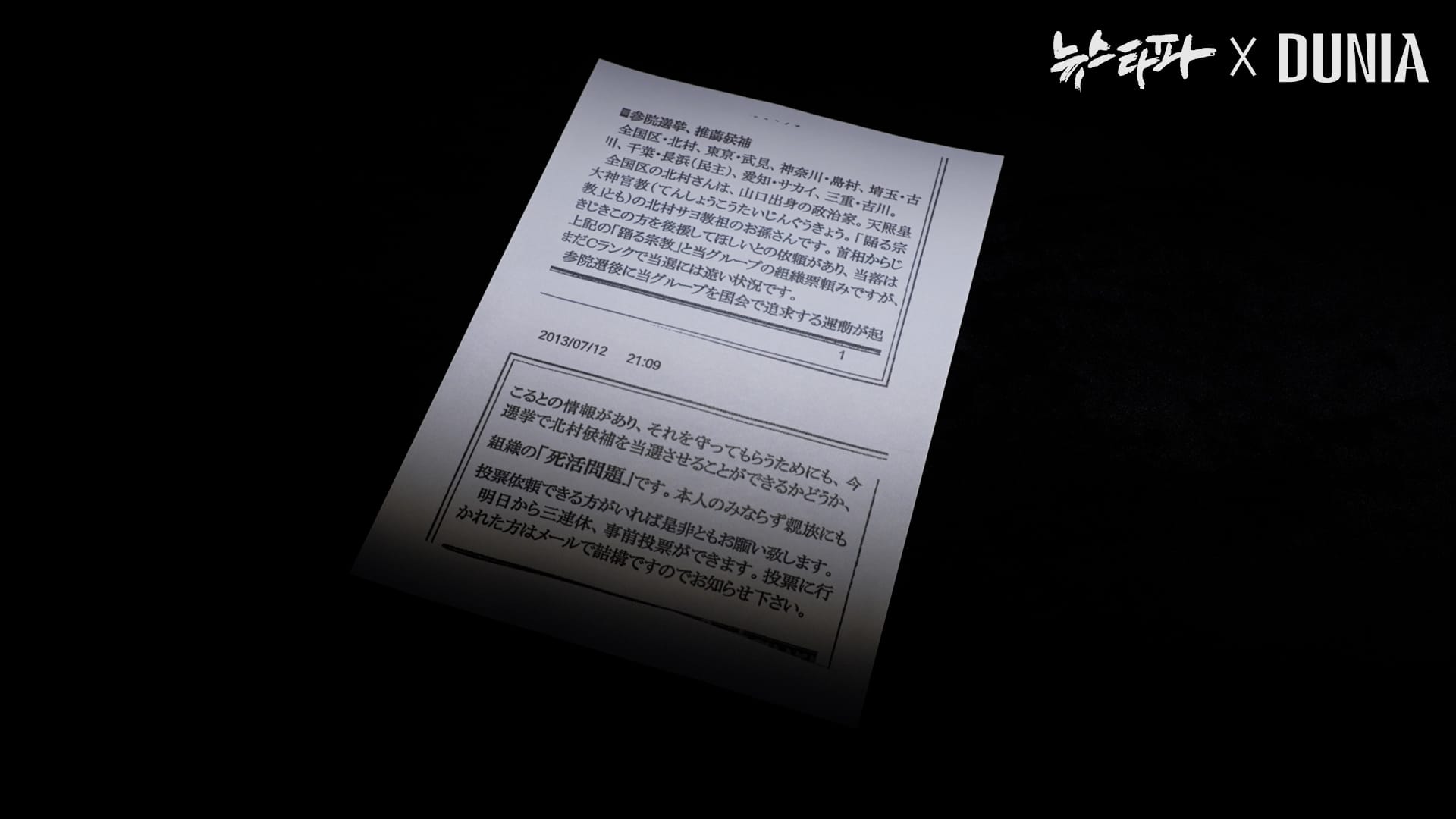
The letter listed the LDP candidates who were to receive bloc votes. It also spelled out what the Church expected in return: obstruction of a legislative proposal being discussed in the Diet that sought to sanction the Unification Church.
Document excerpt: (Shinzo Abe) personally requested support for this candidate. We have information that after the House of Councillors election there will be moves within the Diet to pursue the Church (the Japanese Unification Church). To block this, the election of Candidate Kitamura is a matter of life and death for the Church. (…omitted…) Early voting will be available for the next three-day holiday period. Please notify us by email once you have voted.
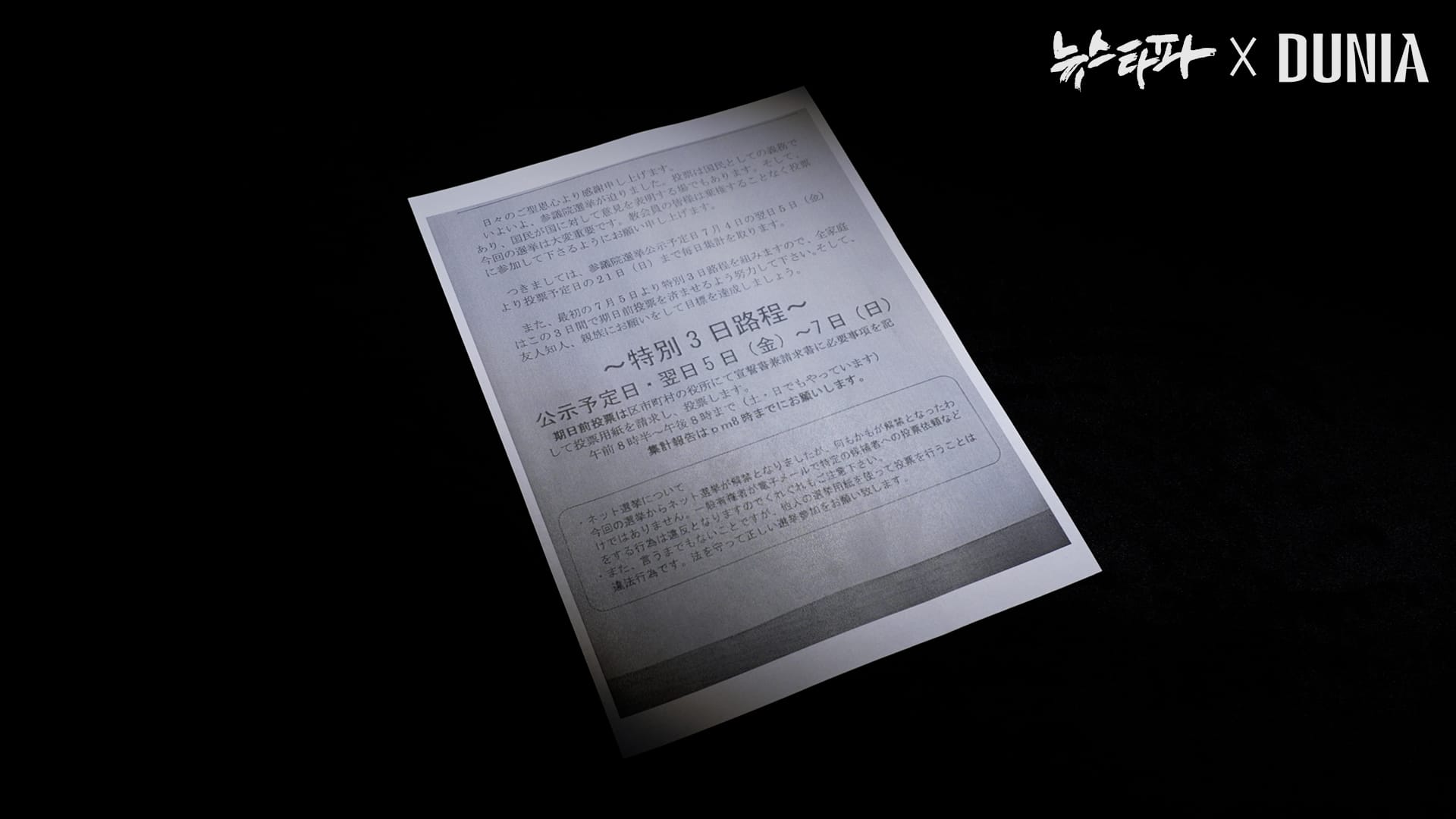
Another internal directive was circulated instructing Unification Church executives to tally the number of believers who participated in early voting.
Document excerpt: This election is extremely important. We ask all members not to abstain but to participate in voting. Accordingly, from July 5 (Fri)—the day after the public announcement of the House of Councillors election—until July 21 (Sun), the main voting day, daily tallies will be conducted. Additionally, from July 5 a special three-day campaign will be organized, and all families should strive to complete early voting within these three days. Please also ask friends, acquaintances, and relatives to help us reach our goals. (…omitted…) Voting hours: 8:30 a.m.–8 p.m. Please submit tally reports by 8 p.m.
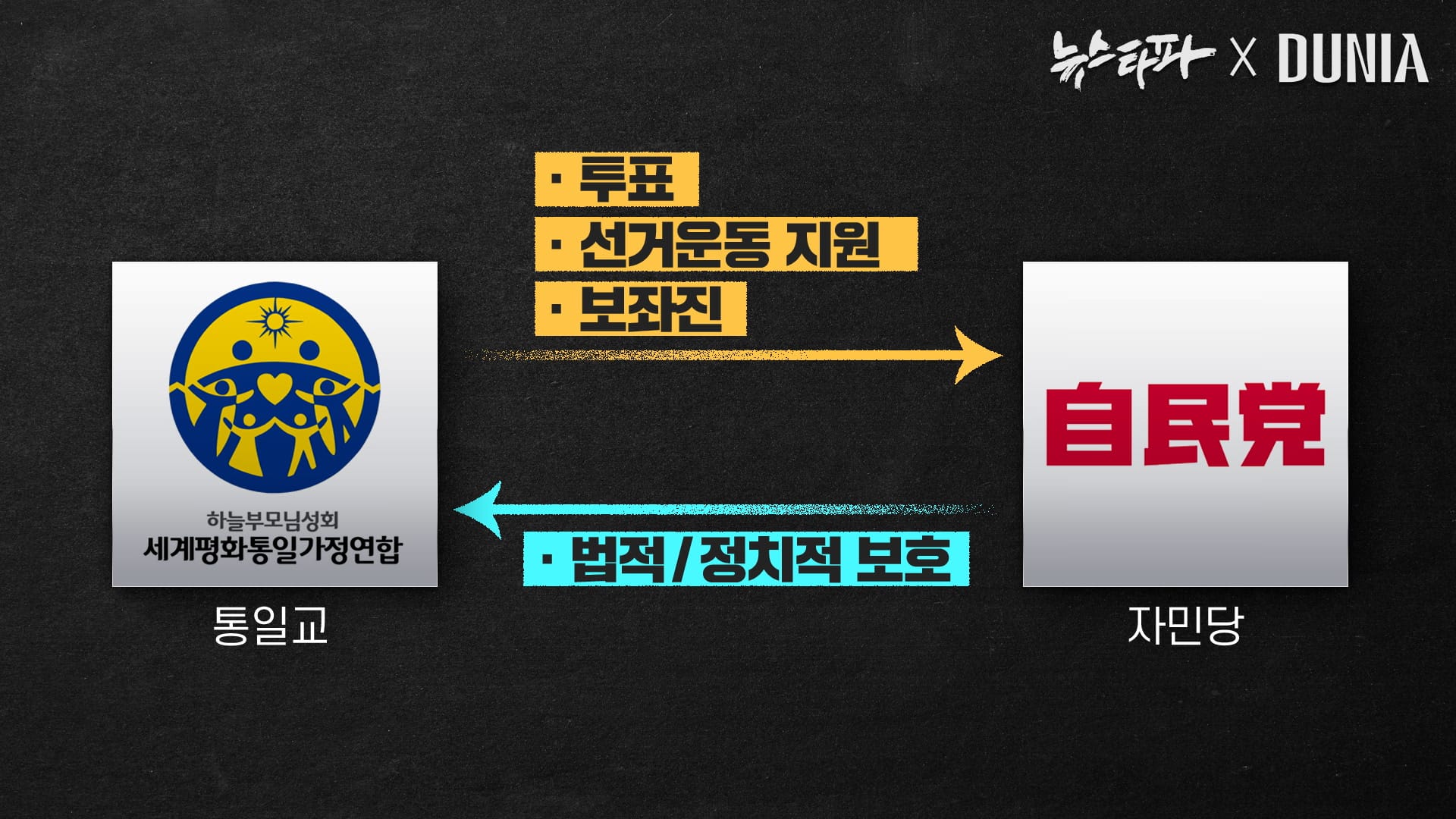
In short, the Unification Church delivered votes to specific political forces in exchange for protection of its own institutional interests—precisely the same structure now emerging in Korea with the Unification Church and the Yoon Suk-yeol political bloc.
Unification Church–Political Bloc: Routine Exchanges of Electioneering Support for Political Positions
Journalists who have long investigated the Unification Church’s ties with Japan’s Liberal Democratic Party (LDP) say that the Church not only supported LDP candidates during elections but also sent Church members to serve as aides once those candidates were elected—creating a recurring pattern of political deals.
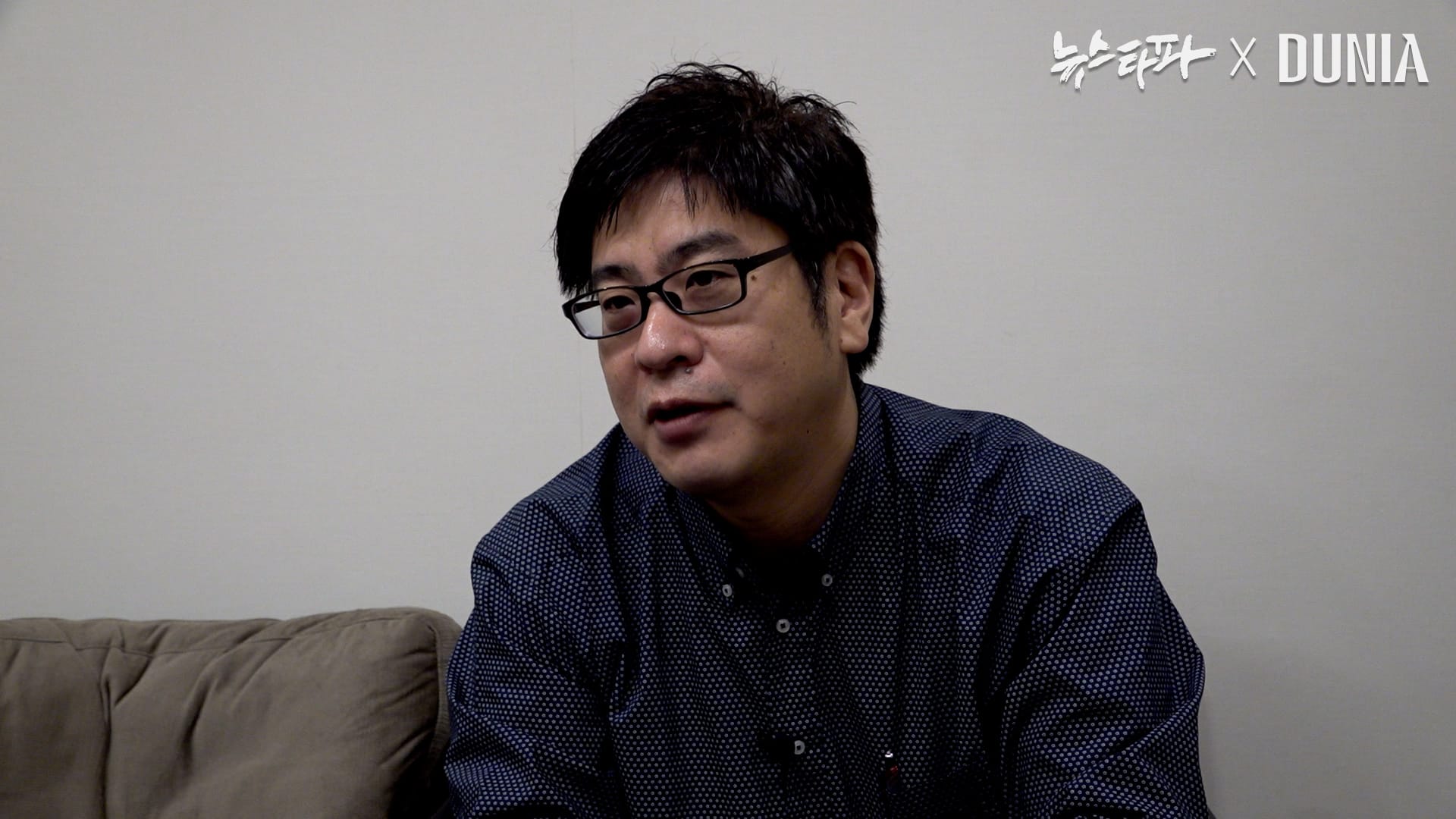
In covering elections, you could clearly see the Unification Church playing such roles. For example, they campaign extremely diligently. They devote themselves to tasks like posting campaign posters and making phone calls beyond just voting. This campaigning by the Unification Church is especially vigorous when LDP candidates are running.
— Makoto Watanabe, Editor-in-Chief, Tansa
The Unification Church began offering full-scale support to the LDP starting with the simultaneous 1986 elections for both the House of Representatives and the House of Councillors. Since then, including through the dispatch of secretaries, the Church has held leverage over politicians.
— Eito Suzuki, Japanese journalist specializing in Unification Church–LDP collusion
Given that the Unification Church transplanted its successful Japanese collusion model into Korea via Yoon Suk-yeol, it is highly plausible that similar exchanges—electioneering support traded for political appointments—are already proliferating in Korean politics.
The amount of money used for political manipulation in Korea is likely far greater than what has been revealed so far. I hope the investigation clarifies how money was siphoned from Japan and how it was used, including operations targeting Korean politics.
— Eito Suzuki
Suzuki warns that if the malignancies created by the Unification Church are not properly removed, Korea could face tragedies similar to the assassination of Prime Minister Shinzo Abe.
(The Unification Church) has long courted politicians in many countries. After Sun Myung Moon’s death, there was Hak Ja Han’s “Only Begotten Daughter” declaration, but even with slight modifications, the methods of extracting money and courting politicians have continued unchanged. In essence, they are focusing on how to maintain and expand “Hak Ja Han’s empire.” It is imperative to clearly uncover and scrutinize the relationships between politicians and the Unification Church in order to resolve these issues.
— Eito Suzuki
On December 2, President Lee Jae-myung instructed the Cabinet to consider the dissolution of religious corporations that violate the principle of separation between religion and state.
Reporting Seulki Lee - skidolma@thedunia.org
Copy Editing Chihwan Ahn