South Korea’s Quiet Pursuit of the Deep Sea

By Grace Moon
- The South Korean government has set its sights on the prospect of mining the deep sea for decades.
- As the global critical minerals race accelerates, the U.S. is moving to establish domestic supply chains outside of Beijing.
- Now, South Korea may finally be ready to leverage its capabilities, but private companies pursuing different paths could create unprecedented legal predicaments and stir geopolitical tension.
Seoul – The first domino fell in April last year, when President Trump signed an executive order paving the way for the U.S. to mine vast swaths of the seafloor. Vowing to “unleash” America’s offshore critical minerals, the order instructed federal regulators to expedite mining permits in U.S. waters and the international seabed beyond any nation’s jurisdiction. It effectively resurrected a long-dormant U.S. law that enables American companies to seek mining permits outside the international regulatory system.
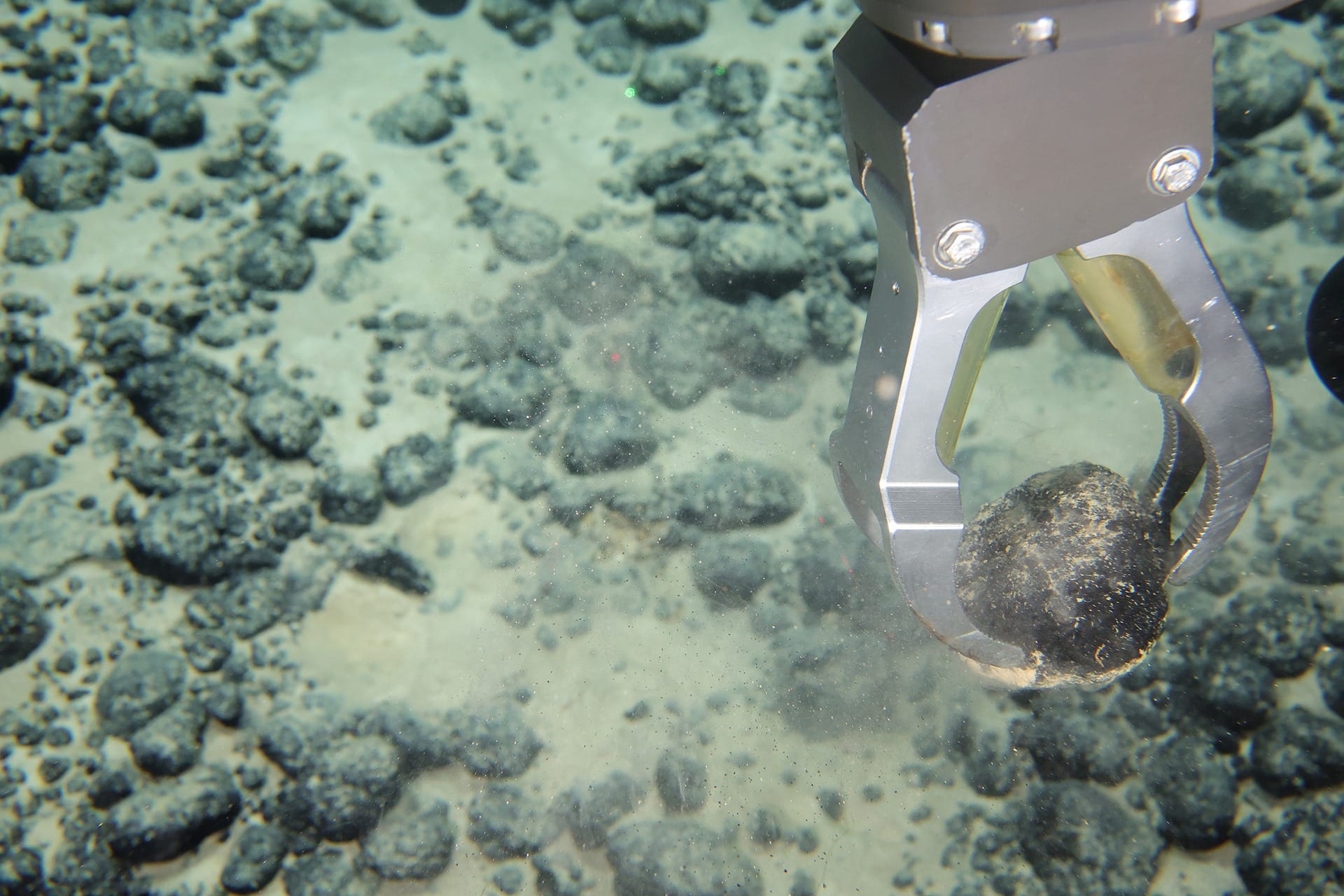
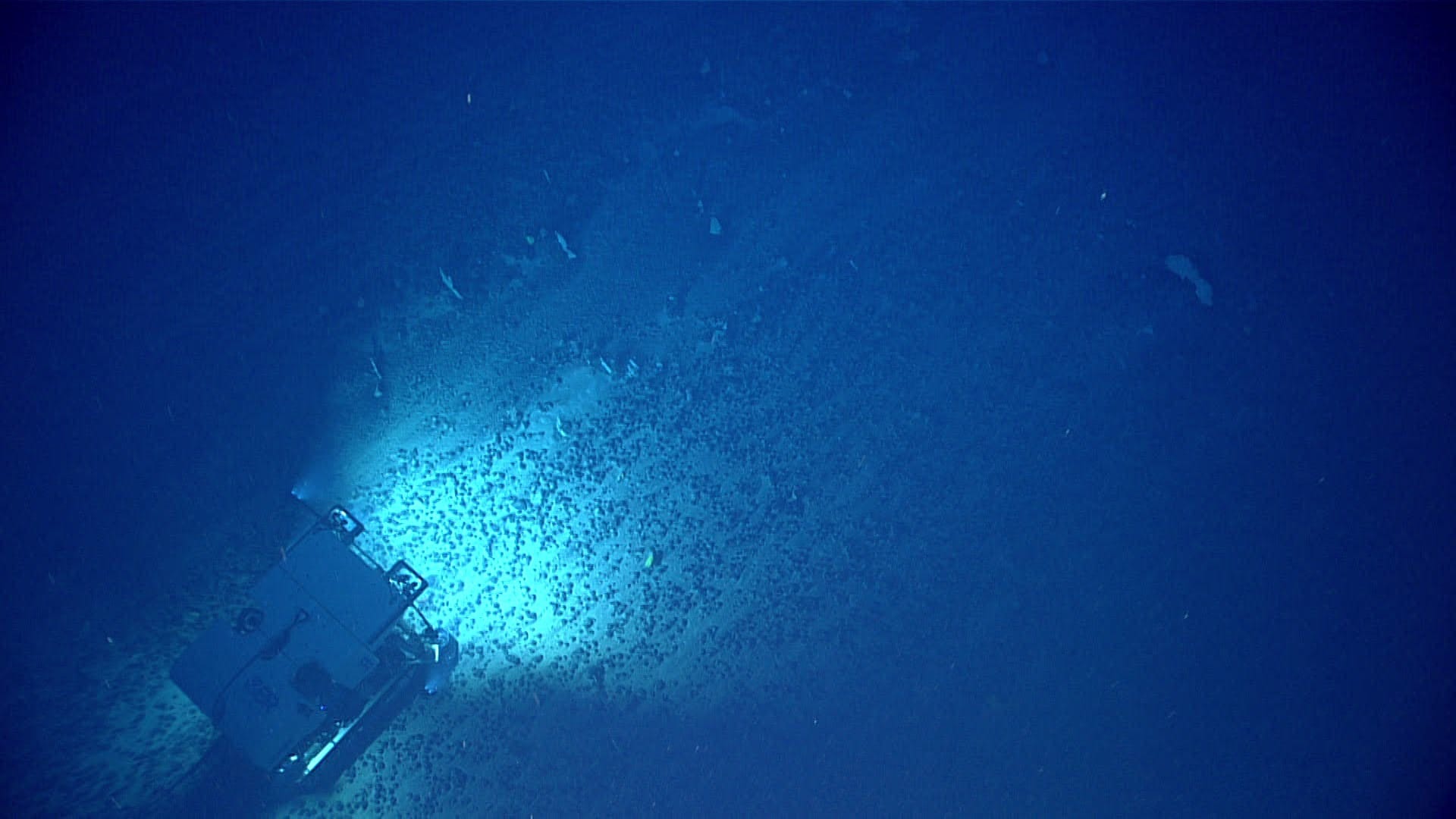
Days later, a Canadian deep-sea mining firm became the first to submit a mining application through the new order. The Metals Company announced that its U.S. subsidiary had applied to commercially extract polymetallic nodules – fist-sized rocks containing a trove of valuable metals – from the bottom of the Pacific seabed.
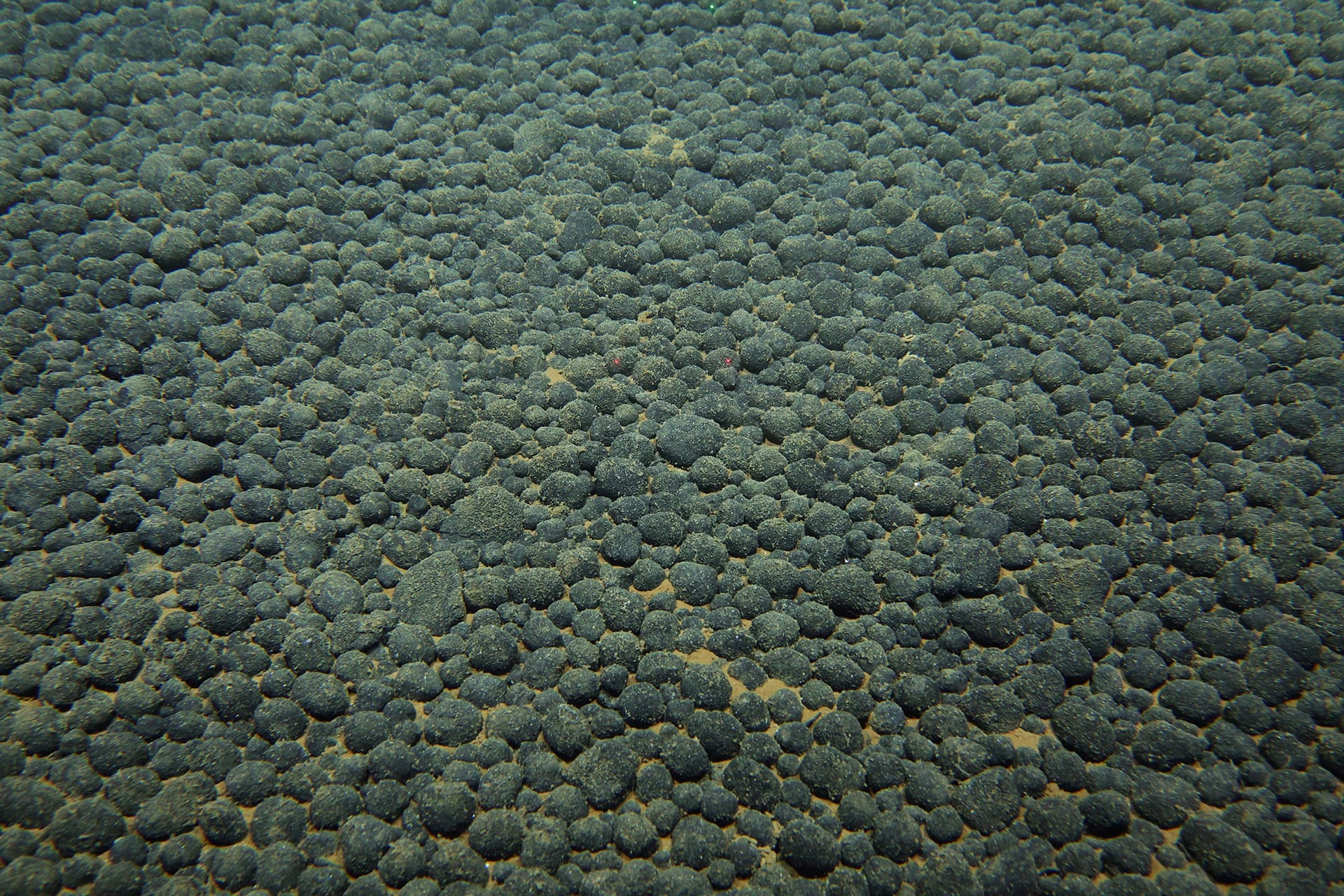
Billions of the nodules are strewn across the ocean floor. The rocks are packed with large concentrations of nickel, cobalt and copper, which are essential for the production of electric vehicles, batteries and defense technologies.
As global demand for critical minerals surges, propelled by the rise of artificial intelligence and renewable energy, more companies are beginning to invest in the deep sea, the Earth’s largest and least explored habitat.
China has long maintained an unrivaled grip on the critical minerals sector. For half of the materials the European Union classifies as critical, China accounts for 70 percent or more of global mining and refining capacity. As its trade spat with the U.S. intensifies, Beijing has demonstrated its willingness to use its control over critical-minerals supply chains as a geopolitical weapon.
About two months after TMC submitted its mining application, another domino fell – this time in South Korea. Korea Zinc, the world’s largest non-ferrous metals smelter, became one of TMC’s largest strategic stakeholders, investing more than USD 85 million in the Canadian firm.
“Korea Zinc is probably the only company outside of China that has the capability to take TMC USA’s materials and turn them into metal product formats required in the United States,” TMC said last year. Together, it added, they could meet the U.S.’s demands for critical metals while “completely by-passing the Chinese supply chain.”
South Korea has increasingly emerged as an indispensable player in the accelerating race to mine the seabed. Refining capacity, rather than extraction, has proven to be the largest bottleneck for the U.S., which lacks the infrastructure to turn raw minerals into usable products.
To close that gap, the Trump administration is racing to build domestic downstream industries, such as minerals processing, while spending billions in federal investment in its push to realign the rare earths supply chain.
In many respects, South Korea is an ideal partner for those ambitions: A longtime American ally with a robust industrial base of manufacturing giants that are equally reliant on critical raw materials, it has built some of the world’s most advanced processing technologies.
Private companies like Korea Zinc have already begun to fill that void. Less than a year after Trump’s executive order, the company revealed plans to build a massive USD 7.4 billion critical minerals refinery in Tennessee through a new U.S. subsidiary. It became the first South Korean company to obtain coverage under FAST-41 – a federal program that fast-tracks environmental reviews for projects, both at home and abroad, that are deemed vital to national security.
Once permitted, Project Crucible, led by the U.S. Department of War, would “become the first large-scale U.S.-based zinc refinery built since the 1970s,” the permitting council said.
The domino effect could soon widen to include South Korea’s powerful chaebol, the family-owned conglomerates that dominate the nation’s economy as well as global semiconductor and battery industries. The companies have aggressively expanded their U.S. operations in recent years while also diversifying trade away from China, positioning them as potential key manufacturers.
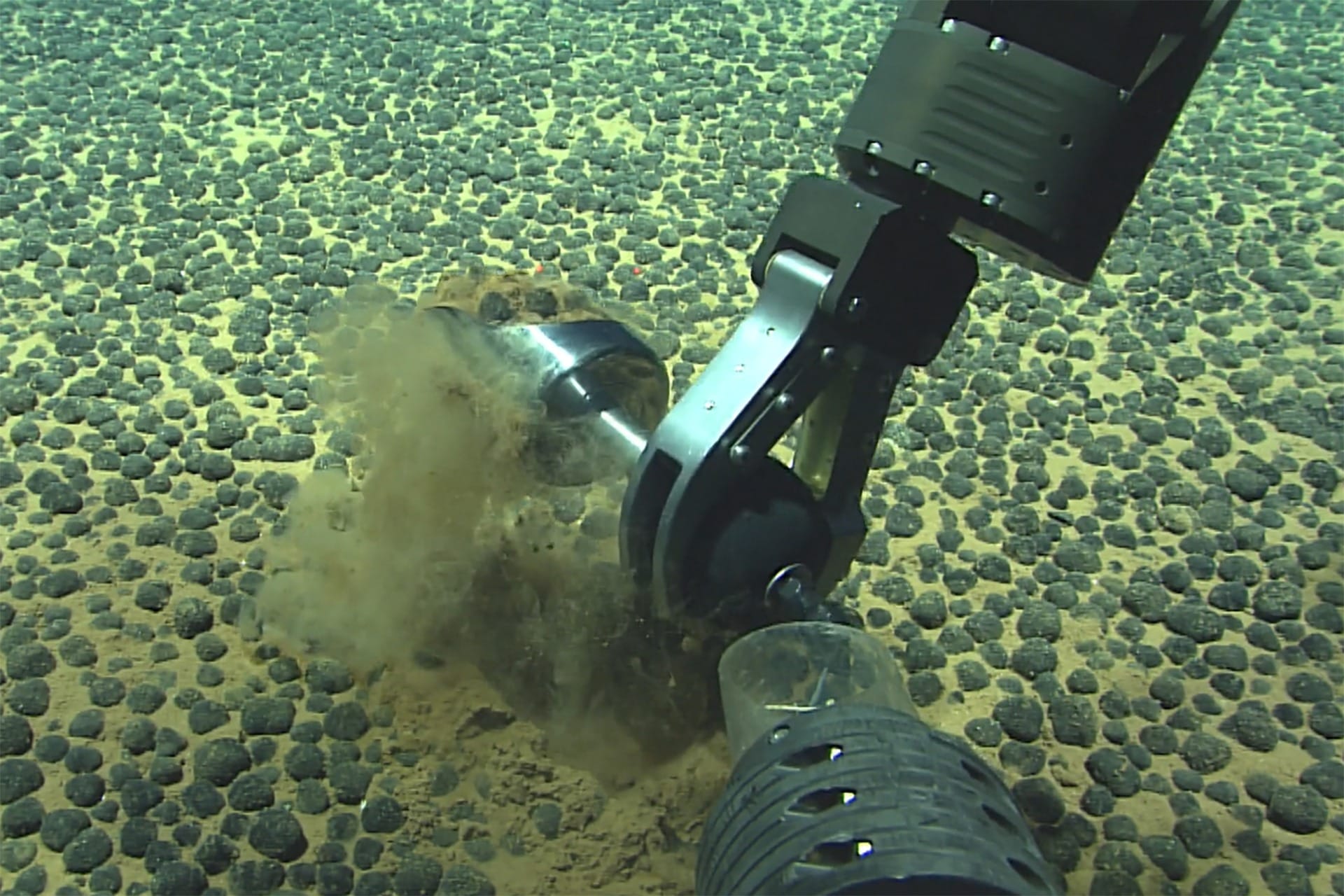
Mining, after all, is only the first step in a chain of events. Nodules would be scooped up from the seafloor by robotic vehicles, pumped to the surface and transferred to offshore carriers. At onshore facilities, the raw ore would then undergo a sequence of processing and refining steps – potentially involving crushing, smelting and refining – before being passed on to industrial manufacturers.
When asked about the company’s future plans, Korea Zinc said in a statement that it “may internally consider the possibility of commercially processing the manganese nodules collected by TMC,” depending on the stage of commercialization and the progress of TMC’s business.
In turn, the U.S. could offer South Korea a new stream of raw materials from the deep sea, effectively cutting China out of the mix. The move would dovetail with South Korea’s recent pivot toward a diversified energy strategy as it finds itself increasingly caught between two of its largest trading partners.
But the push risks violating international rules, which currently prohibit commercial mining, as negotiations over mining regulations have essentially been deadlocked for more than a decade. The U.S. has set off on its own path toward unilateral commercial mining beneath the high seas, joined by a growing band of companies looking to profit from the future of seabed mining and break a conspicuous chokepoint in the global supply chain.
The cascade effect offers a window into a nascent deep-sea mining supply chain that South Korea is angling to play a pivotal role in – as well as the complications that could soon follow.
Decades-long push
For decades, South Korea has set its sights on the prospect of deep-sea mining, an industry that has been explored for more than half a century but has not launched at commercial scale.
The Korean government has eyed seabed mining as both a financial opportunity and a means to combat the country’s own mineral scarcity; more than 95 percent of the country’s critical minerals are imported, the majority coming from China.
“South Korea has recognized for the longest time that deep-sea mining is an area where it’s able to have a competitive advantage,” said Jaemin Baek, a non-resident fellow at the National Bureau of Asian Research.
During that time, it has quietly built a strategic foothold across virtually every stage of the future marine minerals supply chain. In 1996, South Korea joined the council of the International Seabed Authority (ISA), an independent agency established under the Convention on the Law of the Sea (UNCLOS), which is widely regarded as a constitution for the oceans. (The U.S. has not ratified the treaty, and is pursuing an expedited deep-sea mining process through a federal law enacted years before the adoption of the Law of the Sea.)
Through the ISA, South Korea’s ministry of oceans and fisheries has secured three exploration contracts, which reserve specific areas of the international seabed for mineral exploration, research and testing. The country trails China, with five, and Russia, with four, one of which is held through a multinational consortium.
South Korea’s largest claim lies in an area at the center of the global race to mine the seabed: the Clarion-Clipperton Zone (CCZ), a vast abyssal plain stretching across the Pacific seabed between Hawaii and Mexico that contains the world’s largest known reservoir of seabed nodules. There, South Korea has secured an exploration area covering roughly 75,000 square kilometers, the equivalent to nearly three-quarters the size of the country itself.
The country also sits at the front of the discussion table, having been elected as one of the ISA’s largest investors six consecutive times.
However, its effort to make deep-sea mining investments pay off is being complicated by private companies aligning themselves with a U.S. agenda.
The South Korean government could soon confront a critical question: What happens if Korean companies profit from commercial mining under U.S. rules that defy agreements South Korea has signed onto?
South Korea’s oceans ministry declined to comment on whether it was currently working with Korea Zinc on projects related to TMC or the U.S. government, saying it would “proceed within the legal international framework.”
‘Full of contradictions and unknowns’
The question has loomed heavily for Eunhee Kim, executive director at the Climate Ocean Research Institute (CORI), who has spent over 30 years studying marine environments. “Terrestrial mining has caused serious environmental and social harm,” she acknowledged, pointing to land-based deposits that face growing depletion, human rights abuses and environmental destruction such as mass deforestation and water pollution. For these reasons, proponents have portrayed the deep sea as a new frontier for mineral extraction, one they say is essential for the global transition to renewable energy.
But Kim warned the trade-off could come at a colossal cost: mining an extremely vulnerable ecosystem that remains vastly understudied – a decision, she said, that is “full of contradictions and unknowns.”
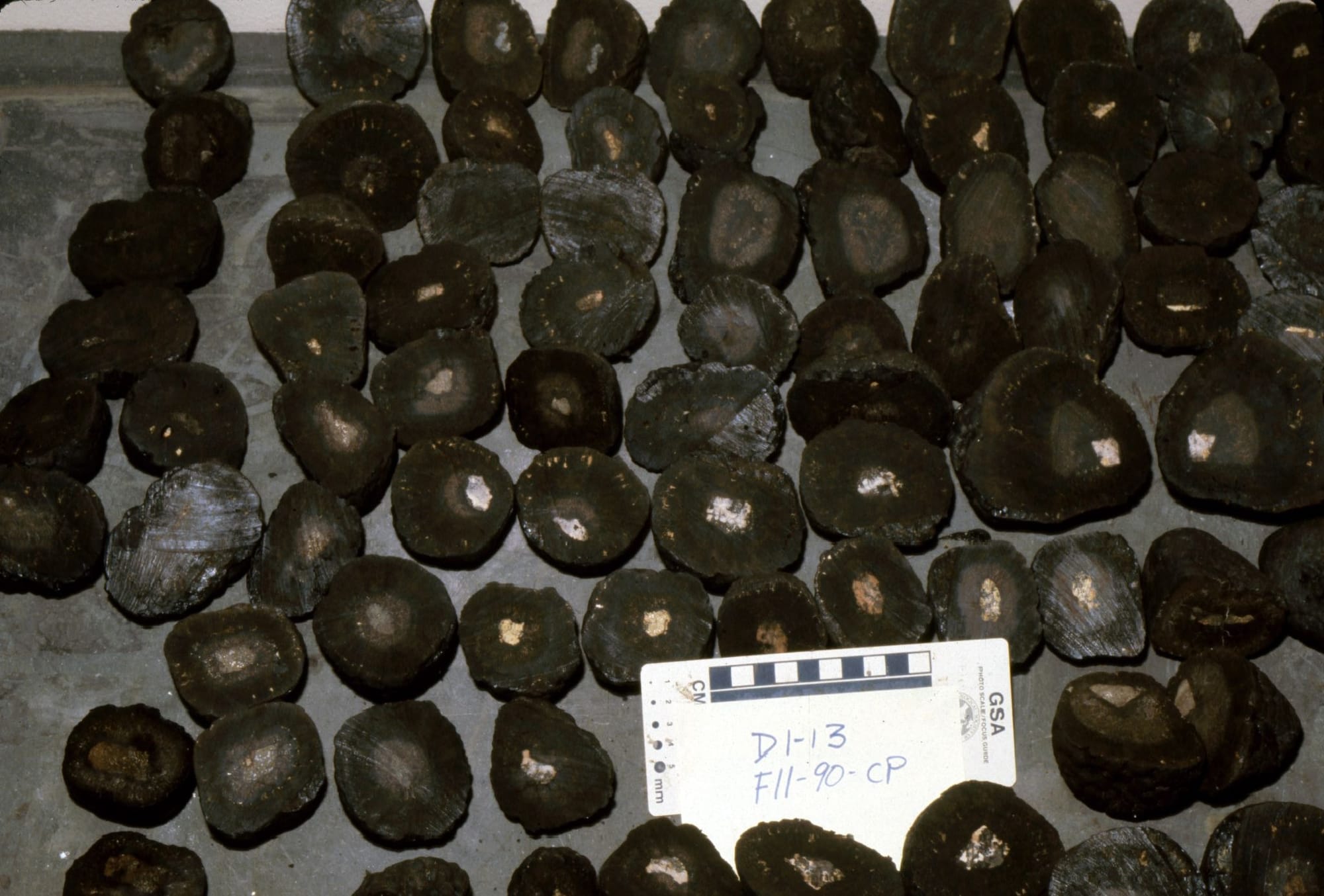
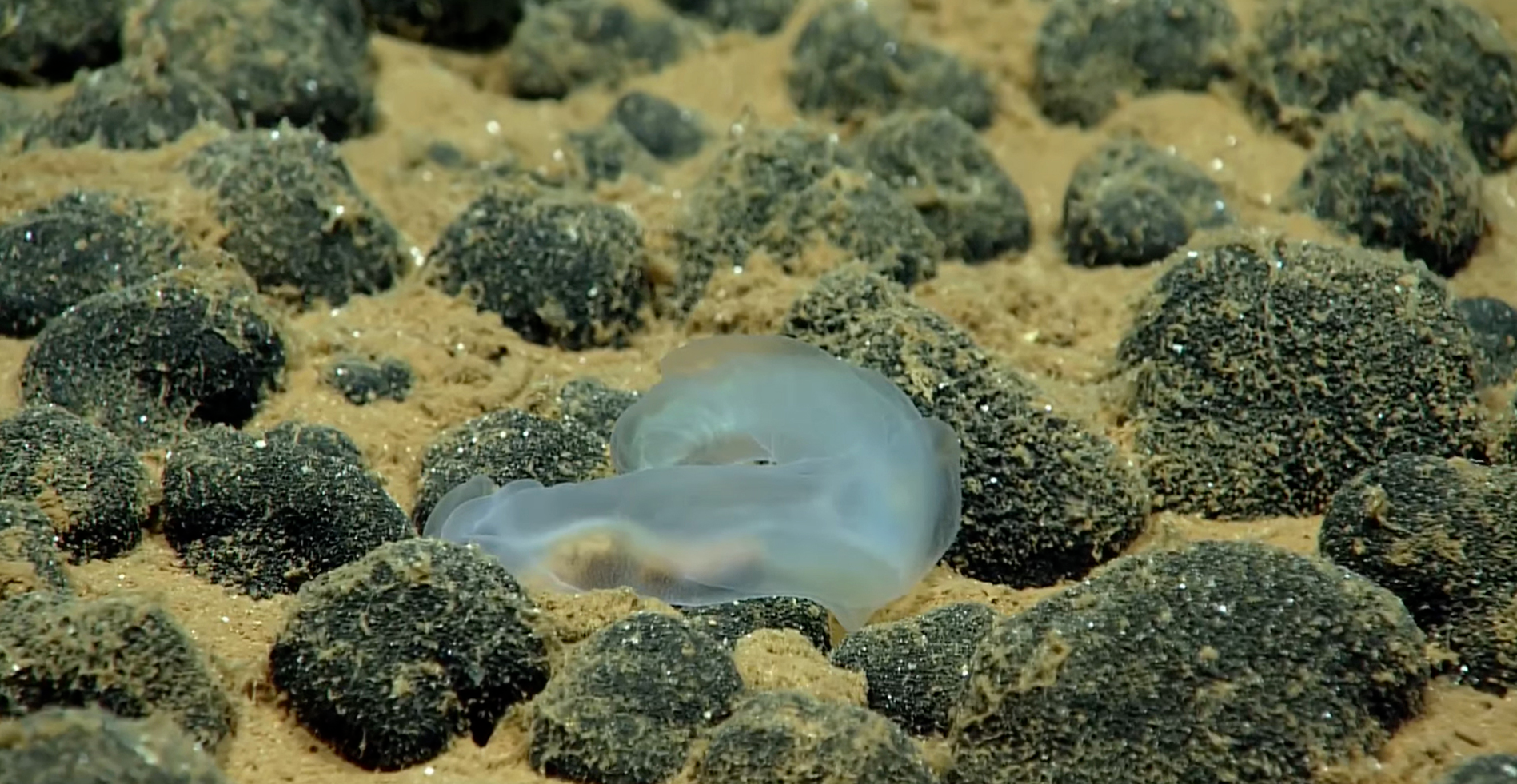
Polymetallic nodules form over millions of years. Like rings of an onion, thin concentric layers envelop a core that can originate from just about any hard fragment, such as a shark’s tooth or a tiny shell. More than 600 animal species are estimated to live on the nodules, which serve as vital anchors for organisms that need hard surfaces to survive.
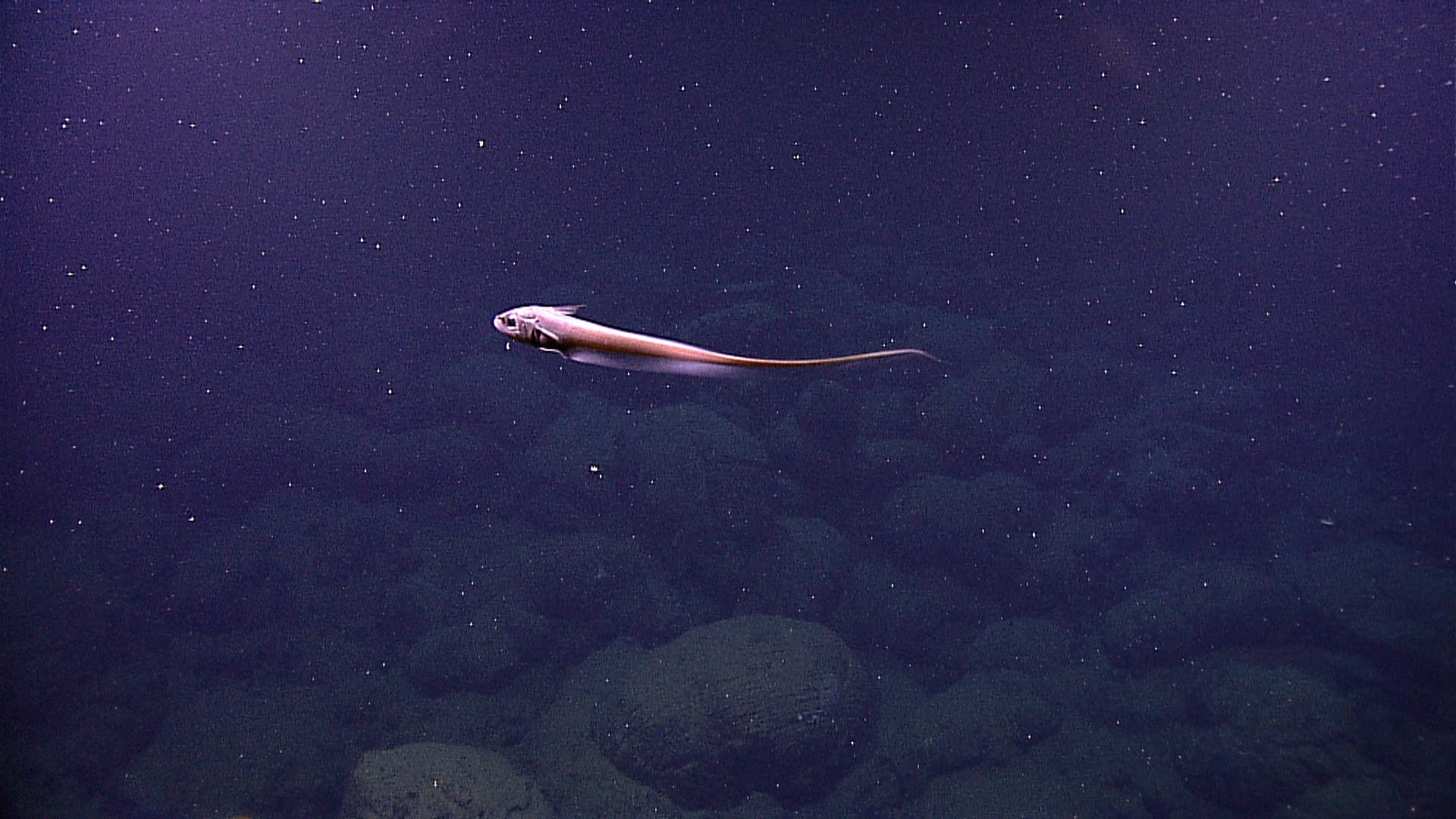
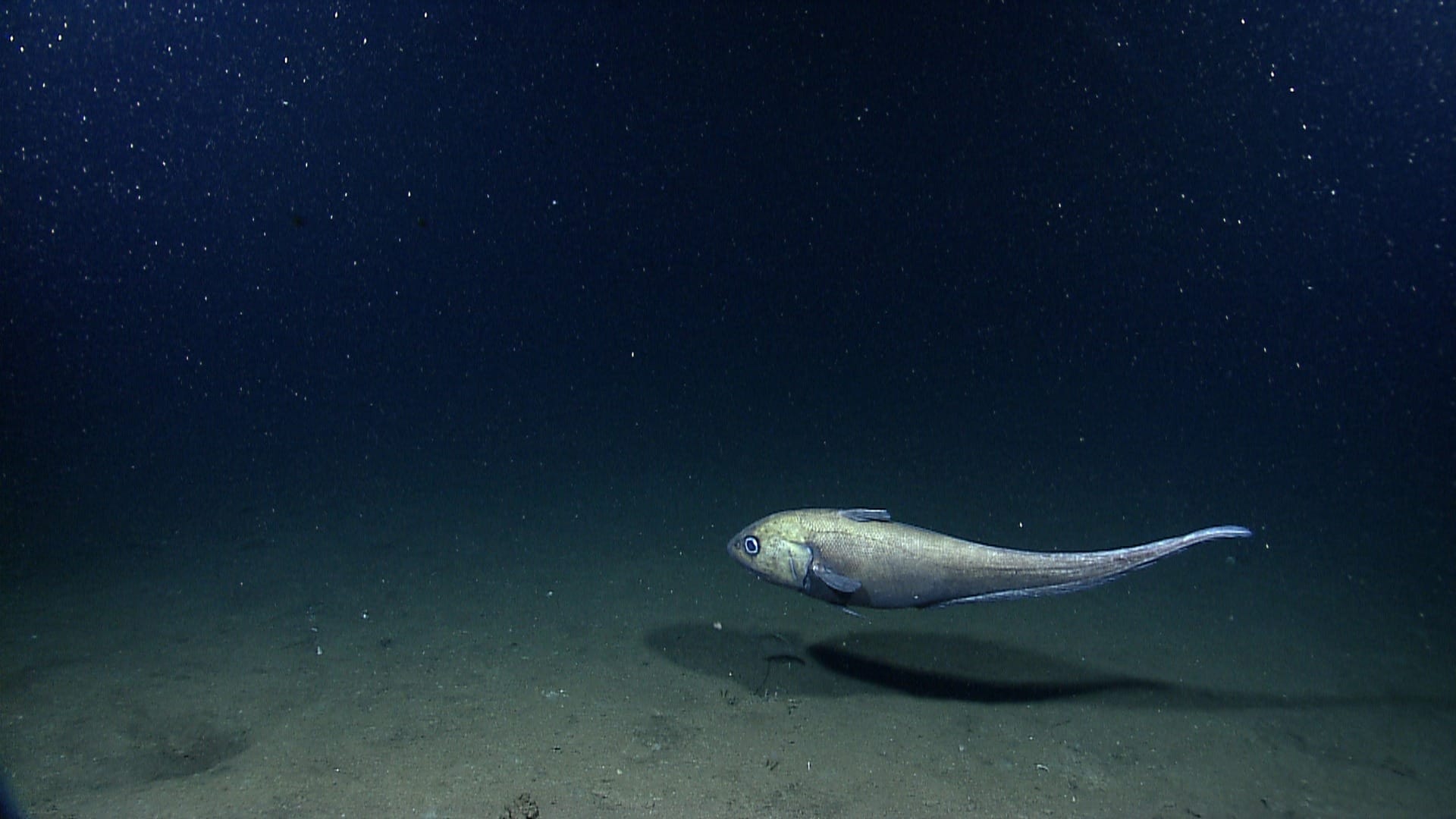
The nodule fields host glass sponges and corals alongside brittle stars and scavenger fishes. And that, research suggests, is only the beginning; recent exploration of nodule fields continues to uncover new species.
“Damage caused on land should be a reason to change how we produce and use minerals, not a justification for putting another ecosystem at risk,” Kim said, urging the need to first examine more efficient resource and recycling methods “before treating a new source of extraction as essential.”
A growing number of marine scientists and environmental groups have also criticized what they see as a paradoxical gamble, warning that extracting minerals from the deep sea could cause potentially irreversible damage to the ocean floor, where life is sparse but extremely diverse.
Other scientific studies have suggested that seabed mining would stir up plumes of fine particles that can drift long distances and smother some seafloor life.



TMC said in a statement that it has addressed environmental concerns by making “significant investment[s] in science.”
After one year of test mining, the company said it had seen “encouraging early signs of recovery,” including the return of pioneer species – the first marine organisms to recolonize disturbed areas.
“Impacts to other organisms were limited to tens of meters, with no measurable effects beyond 100 meters,” it added.
But findings that show a more complex picture have continued to surface. A study published last year and funded by TMC itself, examining changes in the density of small visible life and species richness after test mining, found that both had decreased by more than 30 percent within the mining tracks.
“When the potential consequences of our actions are poorly understood and potentially irreversible, we need to take a cautious approach,” Kim said.
Emerging regulatory gaps
TMC’s mining application to extract these slow-forming nodules is quickly advancing. The company said it expects the regulatory process, which includes environmental tests, to conclude before the end of 2027.
In its statement, TMC said that South Korea and the U.S. are “deepening public-private cooperation on critical-mineral extraction and refining,” and that it could connect “American resources and permitting” with Korean technology to counter Beijing’s dominance.
As the U.S.-led critical minerals race gains momentum, concerns have grown over how private companies, including Korea Zinc, will be held legally accountable for potentially financing activities that breach international law. That accountability, experts say, should extend down the supply chain after extraction.
Despite South Korea’s extensive involvement in the deep sea, the country has repeatedly failed to pass a domestic statute regulating deep-sea mining in international waters. Existing laws govern activities only on the country’s own continental shelf, along with broader regulations related to marine conservation and fisheries.
Under South Korea’s shelved bill, which expired in 2020, those who mine deep-sea resources without an ISA contract or fraudulently obtain a development permit would face up to three years of prison with labor or a fine not exceeding 30 million Korean won (USD 22,000).
But several legal experts told DUNIA the bill risks being narrowly focused on development. And how those provisions would apply to a Korean company processing or investing in minerals from a U.S. operation remains unclear. By contrast, Japan, which is also aggressively pursuing commercial mining, has implemented provisions penalizing private companies that conduct activities in international waters in violation of ISA rules.
This legal vacuum “presents a real risk that could result in a violation of international law,” said Uhm Ye-eun, an expert in environmental law who teaches at Ajou University’s Graduate School of International Studies.
The question applies not only to Korea Zinc, but also to the South Korean government, Uhm said. “If South Korea imports critical minerals extracted outside of the ISA regime, it would force the state into a difficult position regarding its international obligations.”
In a piece published last year in the European Journal of International Law’s blog, environmental lawyers said the South Korean government should confirm whether Korea Zinc’s investment in TMC is actually “intended to benefit TMC-USA’s unilateral activities,” and, if so, put a stop to it.
“Without some kind of line of defense,” Kim said, “these activities will be difficult to contain once commercial mining begins.”
Duncan Currie, an international environmental lawyer who advises the Deep Sea Conservation Coalition, said questions are also mounting over how parties to UNCLOS are expected to exercise due diligence.
There is no fixed standard prescribing exactly what states must do to meet that obligation, Currie explained, but they must do “everything they can to ensure that international laws are properly applied.”
Critics warn that this open-ended standard could encourage contractors to operate in jurisdictions where they can “benefit from more lenient regulations.”
Effectively, that ambiguity allows South Korea to turn a blind eye to private activities “until they become a public or legal controversy,” Uhm said.
Sunk-cost fallacy
For the South Korean government, the legislative gridlock has come at a steep price.
South Korea had already poured billions of won into developing commercial mining technology. Between 1994 and 2015, the government invested more than 150 billion won – close to USD 160 million – toward exploration and the development of mining and smelting technologies, according to a feasibility study, reviewed by DUNIA, published by the country’s largest state-funded marine research institute.
Those investments culminated in MineRo. In 2013, South Korea became the first country to successfully test a self-propelled deep-sea mining robot. Its name is a portmanteau of ‘mineral’ and ‘robot’ that also evokes the word ‘mine’; researchers said it was also meant to mimic the Korean phrase, mirae-ro, which translates into ‘toward the future.’
MineRo was touted as evidence that South Korea could lead the commercialization of an industry that did not yet exist. One of the project’s leading researchers equated operations to the “NASA project of the marine sector.”
But the commercial industry that South Korea had hoped for never arrived, and the government halted funding for its prized technologies in 2016. New players, including TMC, have since surpassed South Korea’s technological capacity.
Ju Se-jong, a scientist who previously spent nine years on the ISA’s legal and technical commission, watched South Korea spend decades investing in deep-sea mining.
Seeing those projects falter felt like "pouring water into a bottomless pit," Ju recalled.A decade later, he said, many of those technologies are deteriorating along with the generation of scientists who helped develop them.
“The pipes for the lifting system have rusted to the point where they could likely be replaced,” Ju said. “Meanwhile, the scientists who worked on these technologies are retiring one by one.”
That dead-end has potentially trapped South Korea in a sunk-cost fallacy: the government has continued to actively invest in related scientific research despite compounding uncertainty over whether its technologies can actually be put to commercial use.
Now, as critical minerals gain new geopolitical significance, South Korea may be moving to revive its technologies, but its stance remains unclear. The oceans ministry said the government is currently developing unmanned equipment for deep-sea exploration and environmental impact assessments but did not comment on plans related to commercial extraction.
Tipping point
By 2065, deep-sea mining could account for 35 to 45 percent of critical metals, if it follows the path of offshore petroleum production, according to the U.S. Geological Survey. But some experts say those estimates are overly optimistic and that the current global economy may be far from ready to accommodate such a change. “Nickel prices would need to be much higher than they are today to make deep-sea mining operations feasible,” said Lyle Trytten, an independent mining consultant who has spent decades working in extractive metallurgy.The U.S., however, seems to be playing a wildcard in its own arena, where global prices don’t necessarily apply, Trytten said. “It has already shown a willingness to push ahead with manufacturing chains that are not competitive by passing costs to U.S. consumers and taxpayers.”
South Korea has increasingly positioned itself to leverage this volatility as an all-in-one mid-and downstream hub. During a September summit, President Lee Jae Myung emphasized the need to “strengthen cooperation across the entire critical minerals value chain,” from exploration to refining, processing and manufacturing.
The same month, Korea Zinc’s massive smelting facility in Tennessee cleared a key environmental review and may soon refine up to 11 types of critical minerals.
Korea Zinc is far from alone in competing for the opportunity to cash in on the deep sea. The dilemma facing South Korea will likely play out elsewhere in the world, and the country’s response could serve as an important precursor.
“To some extent, the government has shifted its stance on deep-sea mining and committed to protecting marine biodiversity,” Kim said. “But it hasn’t been able to shut the door on commercial mining either, and those commitments need to be reflected in its policies.”

Last year, South Korea became the first country in East Asia to ratify a U.N. agreement to protect biodiversity in areas beyond national borders. The country has long championed marine biodiversity and is scheduled to co-host the U.N. Ocean Conference with Chile in 2028.
In a speech last year, the country’s minister of oceans said the U.N. conference demonstrates the government’s “commitment to making oceans healthier and more sustainable.”Yet South Korea has stopped short of joining the global call for a moratorium on deep-sea mining in international waters. According to the Deep Sea Conservation Coalition, 46 countries have called for a moratorium, precautionary pause or ban on deep-sea mining. (No Asian countries have signed the moratorium as of publication.)
How the country chooses to respond could prove consequential. If the U.S. begins commercial development, "the whole landscape will shift dramatically, and the ripple effects will gash through supply chains,” Ju said.
The risks are as unfathomable as the seabed itself. “We really don’t know what will happen,” Kim said. “No one truly knows what those disturbances could mean for the organisms living there.”
Soon, someone is bound to strike, whether it be private corporations like TMC or the U.S. government itself. South Korea has proven it is both capable of, and heavily invested in, a future seabed mining industry. But the stakes are high: decades of investments, legal standing, international relations and the seafloor environment hang in the balance.
For now, it continues to keep its cards close, waiting for an opportune moment to finally play its hand – even as the next domino, perhaps the last, teeters on the edge.
This story was produced with support from the Earth Journalism Network as part of the “Mining the Unknowns” cross-border collaboration on deep-sea mining in the Asia Pacific.
Reporting Grace Moon
Grace Moon is a journalist based in Seoul. She can be reached at gracesoyeonmoon@gmail.com.