🍏 <Dunia Letter> - No. 7
Hello, this is DUNIA, an investigative journalism network uncovering power across Asia.
In this issue of the DUNIA Letter, we reflect on the language and perspectives that surround war — and the frames through which we interpret the news.
We look at how terms such as “self-defense” and “counterterrorism” are used to justify war, and how media framing shapes the way we understand events around the world.
In this letter, we also share news about our recent YouTube live discussion on the Iran conflict, as well as programs where we can meet and engage directly with our readers.
We hope this issue offers a broader perspective on the events currently unfolding across Asia.
🔴 Youtube Live | Who Wanted the Iran War?
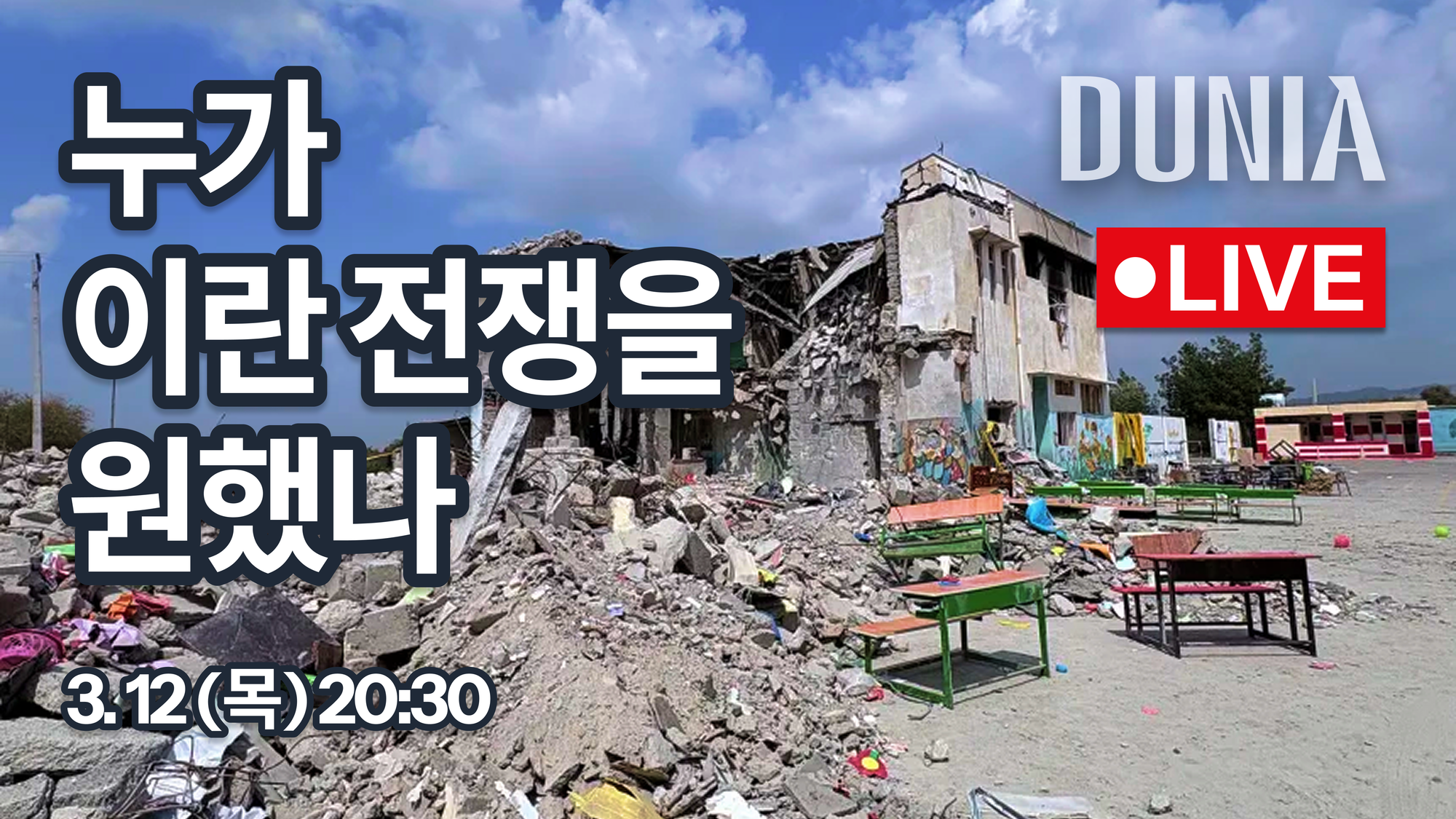
Just yesterday, Thursday, March 12, a live discussion titled “Who Wanted the Iran War?” was broadcast on the DUNIA YouTube channel.
In this conversation, we explored the geopolitical context and background of the recent U.S. and Israeli airstrikes on Iran from multiple perspectives.
Participants included Seulki Lee (journalist and founder of DUNIA), Yukyung Lee (journalist focusing on international conflict and human rights), Myunggyo Hong (civic activist and writer), and Jiwon Lee (university student interested in international affairs and the Middle East).
Rather than relying solely on diplomatic or military experts, the discussion brought together the perspectives of journalists, civil society, and younger voices.
Together, they reflected on the political narratives surrounding the war, media coverage, and how we might better understand the unfolding situation.
DUNIA will continue creating spaces where international issues can be discussed not only through the language of power, but also through diverse civic voices.
The full recording of the live discussion will be available soon on the DUNIA YouTube channel.
🌏 Beyond DUNIA ⑧ | Troubling Rhetoric Justifying Strikes on Afghanistan and Iran
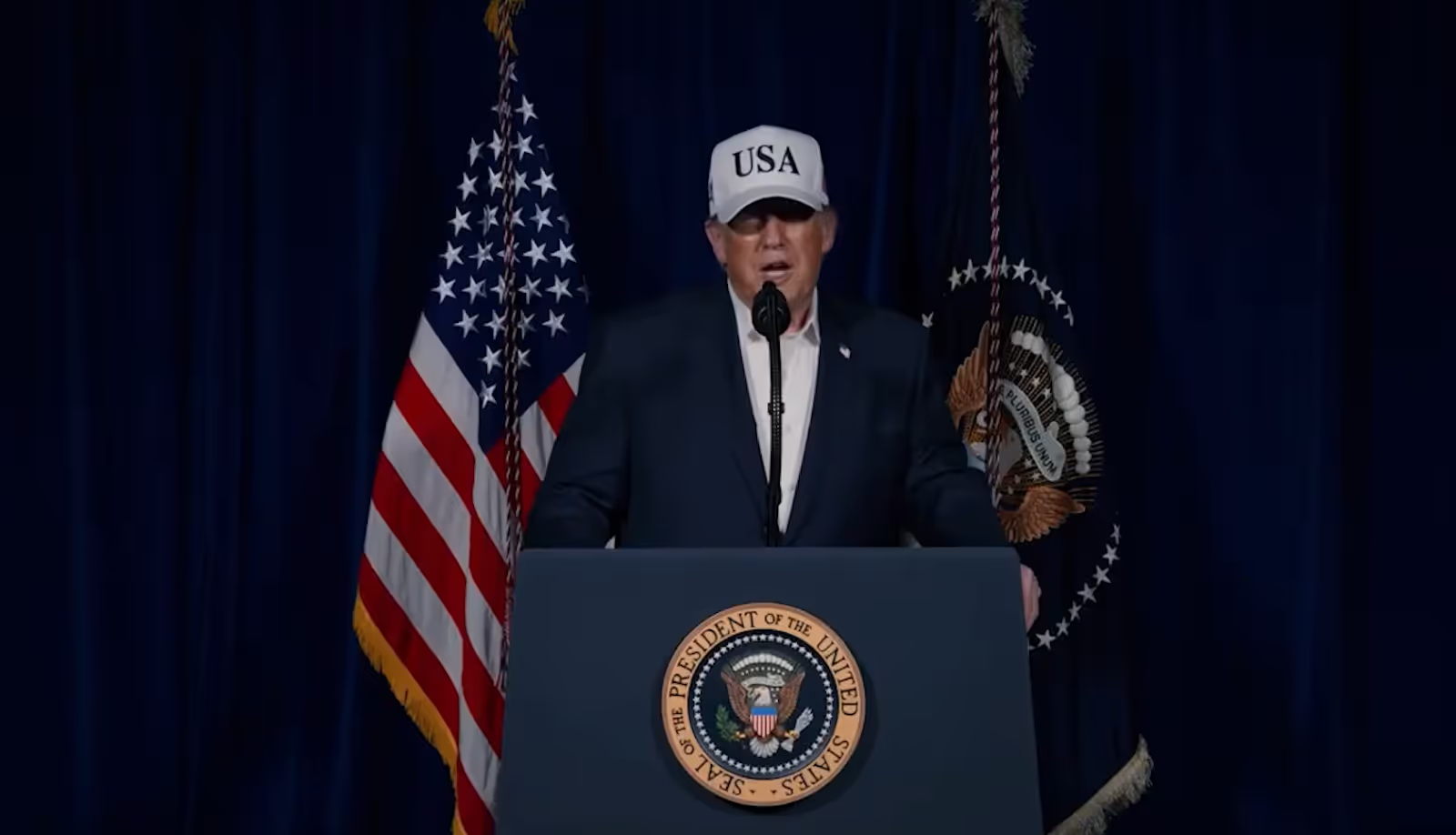
At the end of February, two military actions unfolded within just two days: Pakistan’s airstrikes in Afghanistan and U.S.–Israeli strikes on Iran.
Although these wars occurred in different regions, the justifications presented by the attacking states were strikingly similar. Each framed the target country as a “breeding ground for terrorism” or an “existential threat,” claiming their actions as legitimate exercises of self-defense.
Yet serious questions remain about whether such rhetoric constitutes a valid legal basis under international law for bombing another country’s territory.
Notably, these arguments closely resemble the logic used to justify the 2003 invasion of Iraq.
The problem is that the same “self-defense” argument is now being invoked by the attacked states themselves to justify retaliatory actions, creating a chain reaction of escalating conflicts.
Ultimately, the language used to justify war puts the core principles of international law to the test and risks generating new cycles of violence.
This article examines, from the perspective of international law, the recurring logic of war carried out in the name of security and self-defense.
🌏 Beyond DUNIA ⑨ | [DUNIA Book Club] Review of Jung Moontae’s Hazardous Frame: The Dangers and Possibilities of Framing
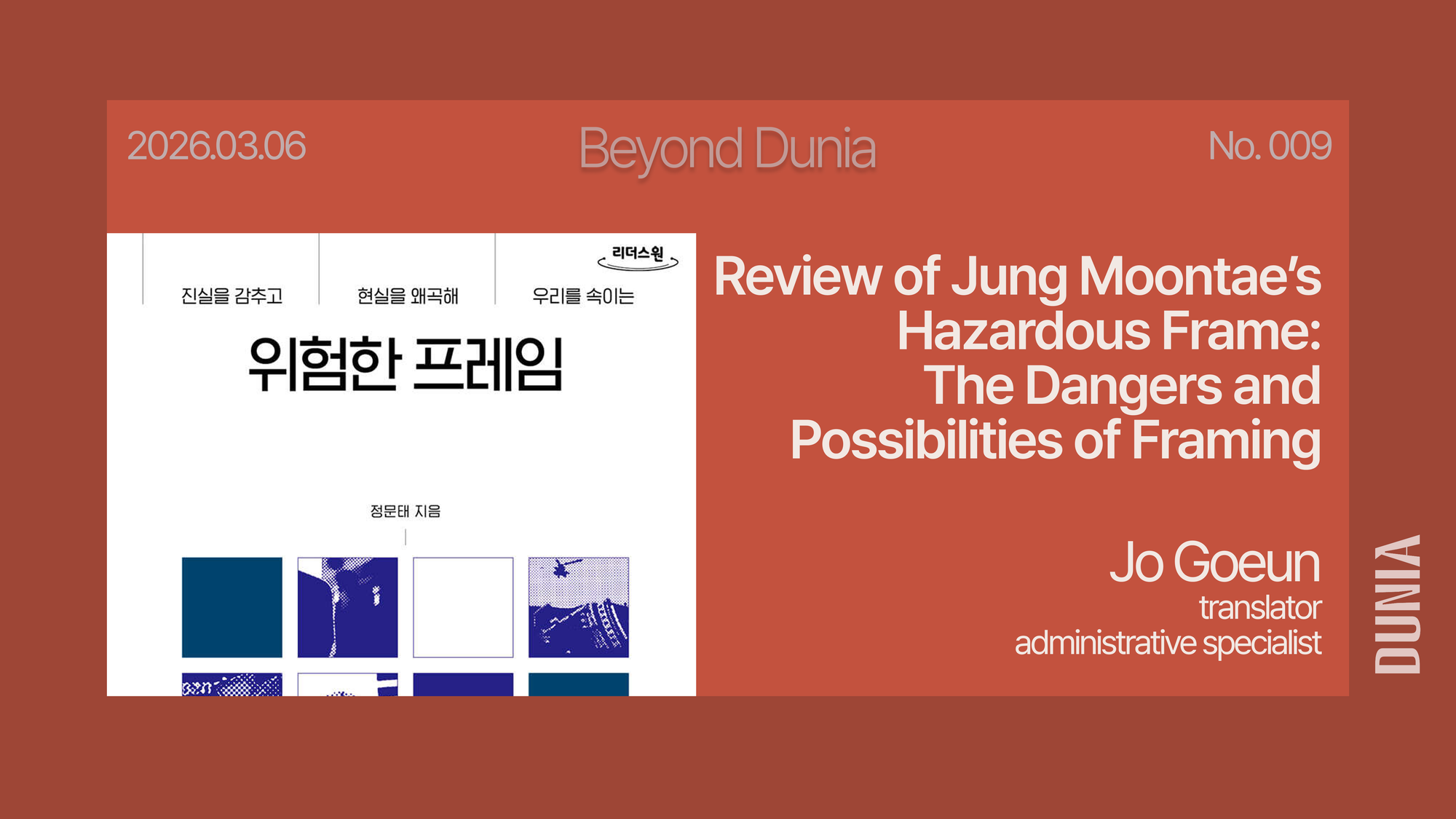
In Beyond DUNIA No. 9, we revisit Hazardous Frame by journalist Jung Moontae, the book discussed at the first meeting of the DUNIA Book Club.
Having covered international news for more than 20 years, Jung Moontae sharply criticizes the way Korean media relies heavily on foreign wire reports, adopts U.S.-centric perspectives, and marginalizes Asia in international reporting. In her review, translator Jo Goeun interprets these issues not simply as journalistic practices but as problems of framing. She asks what kinds of perspectives and values remain hidden when the media claims objectivity and neutrality.
At the same time, she argues that frames are not merely problems to eliminate. Rather, recognizing them can become a starting point for understanding our own position and perspective. The lack of interest and bias surrounding Asian news, she suggests, may also be the result of particular frames rather than natural realities.
📨 Dunia’s Telegram & KakaoTalk Channels


On Dunia’s Telegram channel, you can get the fastest updates on major news from across Asia in real time.

On Dunia’s KakaoTalk channel, we receive inquiries and feedback, including any issues or concerns.
🙏 Dunia 100 | Join Our Founding Donor Circle
Changing the world does not begin with grand slogans, but with those who continue to document and question until the end.
DUNIA reports directly from the field on power, conflict, and the lives caught in between across Asia. To sustain independent investigative journalism driven not by advertising or corporate interests but by readers’ choices, we have launched the <DUNIA 100 Project>. What we need now is not more clicks, but 100 companions willing to stand with us more deeply.
If you are already reading DUNIA, you are starting from the closest place to this change.
Join DUNIA in the work of changing the world.
→ Donation via Wise
→ Bank Transfer: Kookmin Bank 771302-01-672205 (Seulki Lee)
⭐️ Member Benefits
- Recognition in the Dunia Founding Donor 100 List
Your name will be permanently recorded as one of the first supporters who helped build an independent, Asia-focused investigative newsroom. - Quarterly members-only online briefing
Get behind-the-scenes insights from the field and updates on upcoming investigations. - Annual Dunia Report
Receive a special year-end report summarizing major stories, data trends, and power structures across Asia. - Invitations to workshops and events
Supporters are the first to receive invitations to Dunia’s in-person gatherings and community events.
💬 Closing Message
Thank you for reading to the end.
DUNIA will continue documenting the events unfolding across Asia and the structures of power behind them.
If this letter helped you better understand the world around you, please share DUNIA with others. The interest and participation of readers keep independent investigative journalism moving forward.
We look forward to seeing you again in the next letter.
With gratitude,
Dunia
🗂 Contact & Tips
- Website: dunia-asia.org
- Tips: contact@thedunia.org
- Phone: +82-10-6309-0097
- Address: FastFive 7th floor 714, Twin City Namsan 2
366 Hangang-daero, Yongsan-gu, Seoul, South Korea