The Great Deluge of 2025: Why Asia’s "Invisible Dams" are Failing
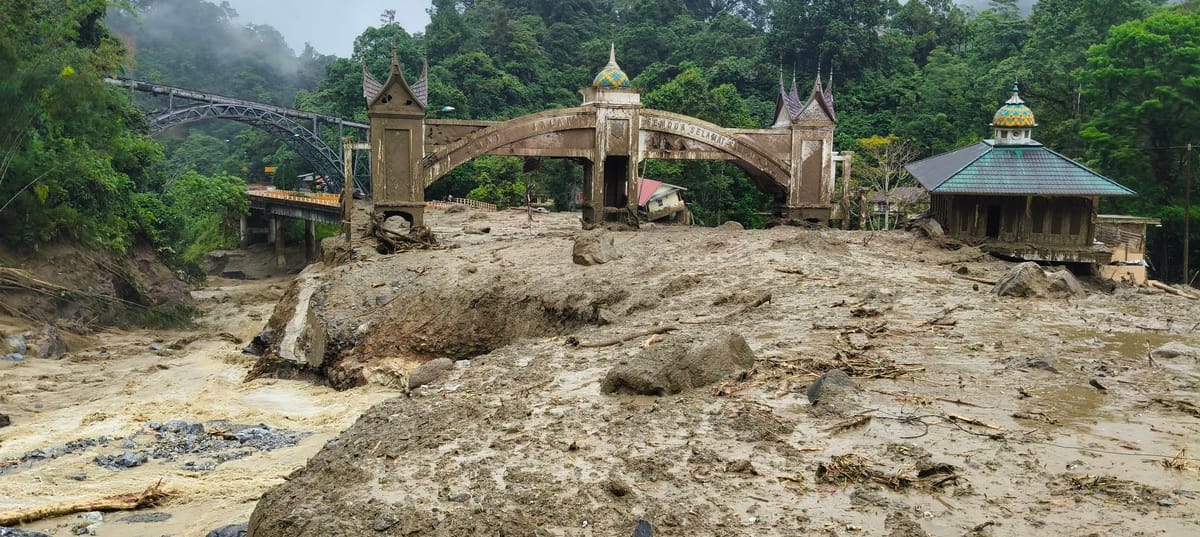
As 2025 draws to a close, the maps of South and Southeast Asia have been redrawn—not by geopolitics, but by water. From the logistics hubs of Thailand to the highland tea estates of Sri Lanka, a season of unprecedented flooding has laid bare a harrowing reality: while the climate crisis is global, the tragedy of its impact is dictated by the quality of national governance.
The catastrophic floods of November and December 2025 reveal that a nation’s safety depends on two types of infrastructure. There is the physical—the levees and canals—and there is the "invisible dam": the integrity of communication, the health of ecosystems, and the strength of social trust. Where the invisible dams cracked, the water claimed everything.
Thailand: The Betrayal of the Green Flag
[Related Articles] The Flood of Accountability: Systemic Failures Behind Hat Yai’s Tragedy
In the commercial city of Hat Yai, the disaster was defined not by a lack of technology, but by a "collapse of administrative design." Hat Yai is a city built on trade, yet its rapid expansion choked the U-Tapao canal, its primary drainage artery.
The tragedy turned into a scandal of trust. The city’s warning system is simple: a green flag for safety, a red flag for danger. Throughout the rising rains, the flag remained green. Local leadership assured the public that the situation was "under control." Relying on this official optimism, residents stayed put, leaving their cars and livelihoods in the path of destruction.
When a three-meter wall of water finally surged through the streets, the green flag became a symbol of betrayal. As one survivor noted, "I believed the government, and because I believed, I lost everything." When disaster management is treated as a PR exercise rather than a life-saving mission, the cost is measured in the permanent closure of decades-old businesses and a fractured social contract.
Indonesia: Ecological Violence Disguised as Fate
[Related Articles] Sumatra's Man-Made Catastrophe: Flash Floods Kill 914 Amid Deforestation and Palm Oil Boom
Crossing the strait to Sumatra, the narrative shifts from administrative failure to ecological crime. Between late November and early December, over 900 people perished in flash floods. The "smoking gun" was found floating in the streets of Padang: thousands of massive, commercially cut logs.
This was no mere act of God. Between 2017 and 2021, Indonesia’s relentless drive for palm oil and mining saw the loss of 2.54 million hectares of forest annually—the equivalent of six football fields every minute. By stripping the highlands, the state stripped the land of its ability to hold water.
Despite the debris, some officials continue to label the event a "natural disaster." Yet, the turbid, log-filled waters tell a different story. It is a direct line from the corporate spreadsheet to the mud-filled bedrooms of West Sumatra. In Indonesia, the flood was the inevitable consequence of treating the environment as a factory rather than a life-support system.
Malaysia: The Adaptation Gap
[Related Articles] When The Water Keeps Rising: How far can Malaysia’s flood resilience stretch?
In the Malaysian state of Perlis, the story is one of technological limits. Unlike its neighbors, Malaysia had prepared. With a multi-billion ringgit budget and the sophisticated National Disaster Management Agency (NADMA) at the helm, the country was, on paper, ready.
However, the "Mini Tsunami" of late 2025 proved that the climate is moving faster than our models. "Explosive" rainfall and trans-border surges through underground limestone channels overwhelmed even the best-laid plans.
Here, the "Adaptation Gap" is most visible. While the government boasts high-tech apps and relief centers, farmers are found living under highway overpasses because bureaucratic aid registration is too complex for the displaced. Malaysia teaches us that even with wealth and planning, infrastructure is useless if it cannot adapt to the erratic, "new-extreme" behavior of a warming planet.
Sri Lanka: Resilience in the Teardrop
[Related Articles] Sri Lanka’s Unbroken Spirit In The Wake Of Cyclone Ditwah
Finally, in Sri Lanka, Cyclone Ditwa brought destruction on a biblical scale. On November 28th, the island received 10% of its annual rainfall in a single day—a discharge rate comparable to the Amazon River hitting a mountain range.
Yet, where systems in wealthier nations crumbled, Sri Lanka’s "invisible dam" held firm. Rooted in the cultural concept of Dana (the virtue of giving), the social reflex was instantaneous. Despite the country’s fragile economy, citizens who had lost their homes lined up for hours to donate blood. Community kitchens (Dansal) appeared overnight, and fishermen transported their boats inland to rescue those trapped in the mountains.
Even the region’s deepest political fault lines softened; India and Pakistan coordinated aid, with relief planes crossing disputed airspace in a rare moment of "disaster diplomacy." Sri Lanka proved that while you cannot always stop the water, a high-trust society can keep a nation afloat when the concrete fails.
The Forecast for 2026
The lessons of 2025 are stark. Infrastructure is more than just drainage pipes; it is the honesty of a mayor, the preservation of a forest, and the willingness of a stranger to help.
As Asia moves deeper into an era of climate volatility, the most successful nations will be those that build both types of dams. We need the concrete to hold back the river, but we desperately need the trust to hold together the people.
Reporting Seulki Lee - skidolma@thedunia.org