Jakarta’s Impossible Home, What Housing Really Costs in Indonesia’s Capital
By Israel Temmie
- Median-income earners in Jakarta (around IDR six million a month) would need roughly 10 years just to save up the down payment for a low-cost apartment, as the gap between income and housing prices continues to widen.
- While apartment and mixed-use development is booming in Jakarta, most new supply is concentrated in high-end projects — leaving little to no affordable housing for ordinary residents in the city center.
- As a result, many residents are being pushed to outlying areas such as Bekasi, Depok, and Tangerang, enduring daily commutes of 2–3 hours, and are increasingly having to rescale their expectations of what homeownership even means.
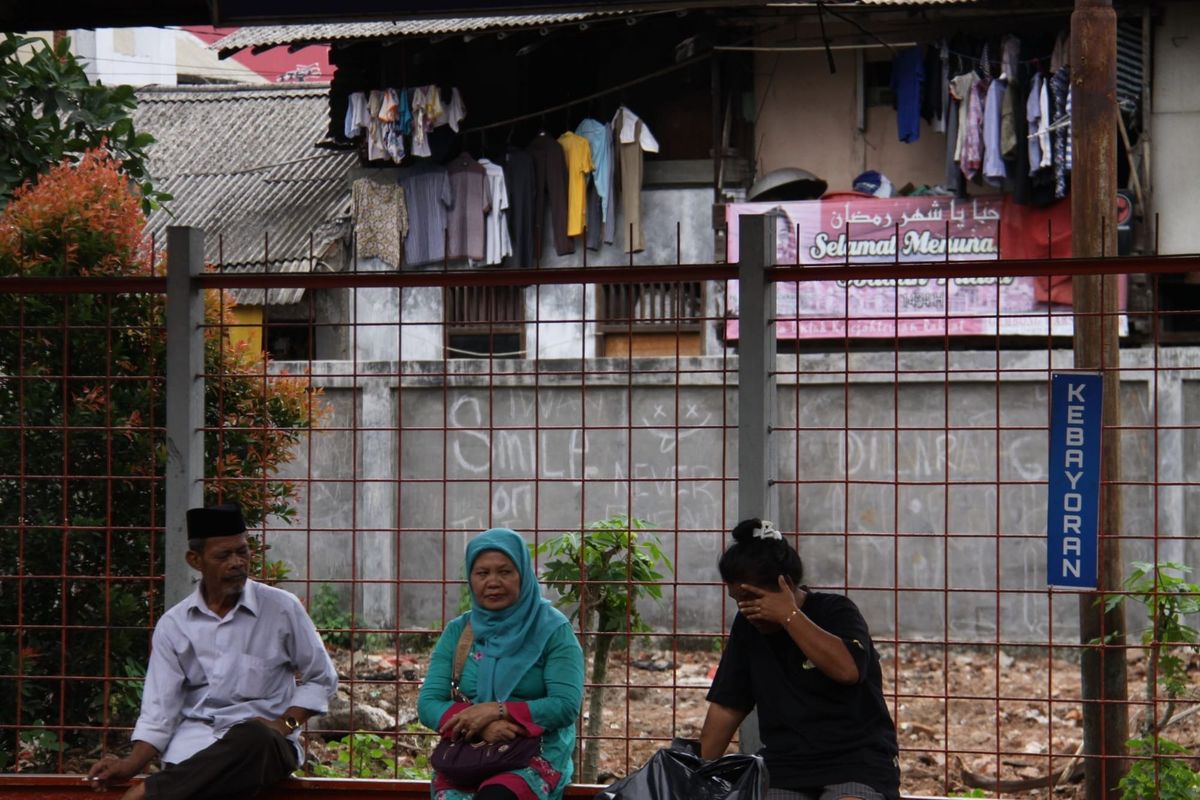
Jakarta – On the outskirts of Jakarta, where the city gives way to rows of unfinished estates and narrow access roads, Rian wakes before dawn. By 5:15 a.m., he is on a motorbike heading toward a commuter train station, beginning a journey that will take nearly two hours into the city’s business district.
He no longer lives in Jakarta. He cannot afford to.
“I used to think if I worked hard enough, I would buy something small in the city,” he says. “Now I just want something I can finish paying for before I’m 50.”
Rian earns around 6 million Indonesian rupiah a month, roughly in line with Jakarta’s median income. On paper, that places him within the city’s growing middle class. In practice, it leaves homeownership in the capital increasingly out of reach.
When the Numbers Stop Making Sense
Across Jakarta, property prices have risen far faster than wages. Data from Indonesia’s Central Statistics Agency and property market reports show that even modest apartments in central areas can cost between 800 million and 1.5 billion rupiah, while landed homes in many districts regularly exceed 2 billion.
For someone earning 6 million rupiah monthly, the math quickly becomes prohibitive.
If a buyer were able to save 30 percent of their income, about 1.8 million rupiah each month, it would still take close to a decade to accumulate a 20 percent down payment on a lower range apartment, based on current prices. In practice, that timeline is likely longer, as it does not account for inflation, rising property values, or unexpected expenses.
In reality, the timeline is likely longer.
Mortgage access further complicates the picture. Indonesian banks typically require stable formal employment, low debt burdens, and significant upfront capital. For many young workers, especially those without family support, these conditions place ownership out of reach long before they begin seriously searching.
Housing researchers and urban policy analysts have consistently pointed to this widening gap between income and property prices as one of the defining pressures shaping Jakarta’s urban future.
A Boom That Doesn’t Translate to Access
Over the past decade, Jakarta’s skyline has transformed. High rise apartments, gated complexes, and mixed use developments have multiplied across the city, often marketed with amenities like gyms, pools, and integrated retail spaces.
But increased construction has not meant increased affordability.
Much of the new supply is concentrated in higher end developments, where returns are more attractive for developers. Mid range housing, particularly for first time buyers, remains limited in central areas where demand is highest.
Government backed housing schemes, including subsidized mortgage programs, have expanded in recent years. Yet these are often more accessible in satellite cities than in Jakarta itself, where land costs continue to rise.
The result is a market where housing exists, but not at price points that reflect what most residents earn.
Renting as a Permanent Condition
For those priced out of ownership, renting is not always a stable alternative.
In central districts, even small apartments or studio units can consume a large share of monthly income. Lower cost options, including kos boarding houses, are more accessible but come with trade offs in space, privacy, and infrastructure.
Ayu, who moved to Jakarta from Central Java for work, shares a single room in West Jakarta.
“It’s the only way I can save anything,” she says. “If I move closer to my office, my salary will disappear into rent.”
Like many migrant workers, she balances proximity against affordability, often at the expense of comfort.
Life on the Periphery
As housing costs rise, more residents are pushed outward into Jakarta’s surrounding cities, including Bekasi, Depok, and Tangerang. These areas offer relatively lower property prices and rents, but at a cost that is harder to quantify.
Commutes stretching two to three hours each day have become routine.
Urban planners have increasingly pointed to this pattern as a defining feature of Jakarta’s growth, where affordability is achieved not through accessible housing, but through distance. Time becomes the hidden price of entry into the city’s economy.
For workers like Rian, the trade off is constant.
“You don’t really live in Jakarta,” he says. “You just work there.”
Rethinking the Dream of Ownership
Homeownership has long been tied to ideas of stability and success in Indonesia. For many families, owning a house is not just a financial milestone, but a social expectation.
But in Jakarta, that expectation is shifting.
Younger residents are increasingly recalibrating what a “dream home” looks like. For some, it means settling for smaller apartments instead of landed houses. For others, it means buying far outside the city. And for a growing number, it means accepting that ownership may not be realistic in the near future.
“We grew up thinking there was a path,” Ayu says. “School, job, house. But the house part feels out of reach.”
Beyond Individual Effort
It is easy to frame housing struggles as personal financial challenges. But in Jakarta, the scale of the problem points to something larger.
Wage growth has not kept pace with rising land and property values. Development patterns continue to favor higher end projects. Access to credit remains uneven, particularly for workers in informal or unstable employment.
Taken together, these factors shape a system where homeownership depends not only on income, but on existing access to capital, family support, and timing.
In that context, the question is less about whether individuals are saving enough, and more about whether the system itself allows for realistic pathways to ownership.
What the Future Holds
Efforts to address housing affordability continue, from public housing initiatives to financing schemes aimed at first time buyers. But their reach within Jakarta remains limited compared to the scale of demand.
Without significant shifts in policy, planning, or market incentives, the gap between what people earn and what housing costs is likely to persist.
For many residents, that means adjusting expectations.
Rian has stopped searching for property within Jakarta. Instead, he is saving for a home even farther from the city, where prices are lower and ownership feels possible, if still distant.
“It’s not what I imagined before,” he says. “But it’s what I can actually work toward now.”
More from the series | Housing in Asia
Prologue – Asian Cities’ Unaffordable Housing Equation
Part 1. – Jakarta’s Impossible Home, What Housing Really Costs in Indonesia’s Capital
Part 2. – Jakarta's USD 18,800/m² District Gets a Housing Experiment
Part 3. – The Invisible City: Life Beneath Delhi’s Rising Skyline
Reporting Israel Temmie - temmiextreme@gmail.com
Translation Seulki Lee - skidolma@thedunia.org