Indonesia’s Students Rally: “Declare the Fires a Disaster”
By Seulki Lee (DUNIA Editor-in-Chief, Journalist) – skidolma@thedunia.org
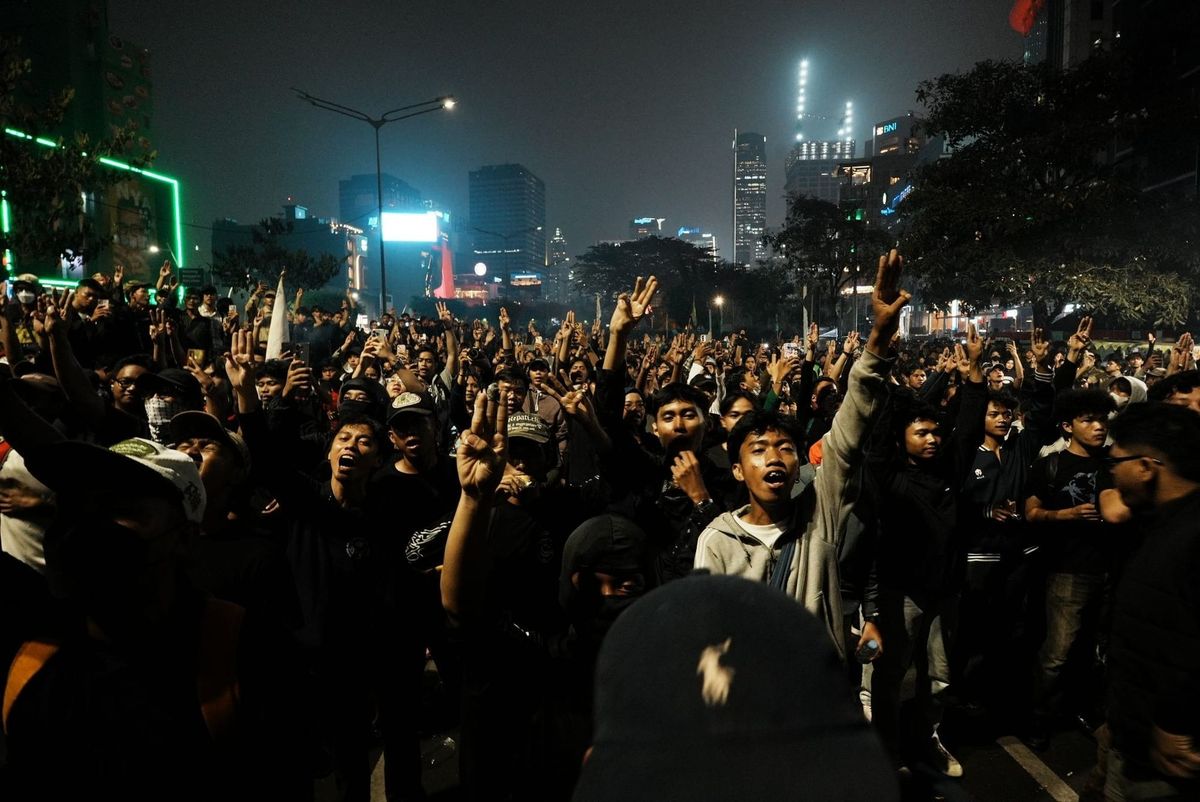
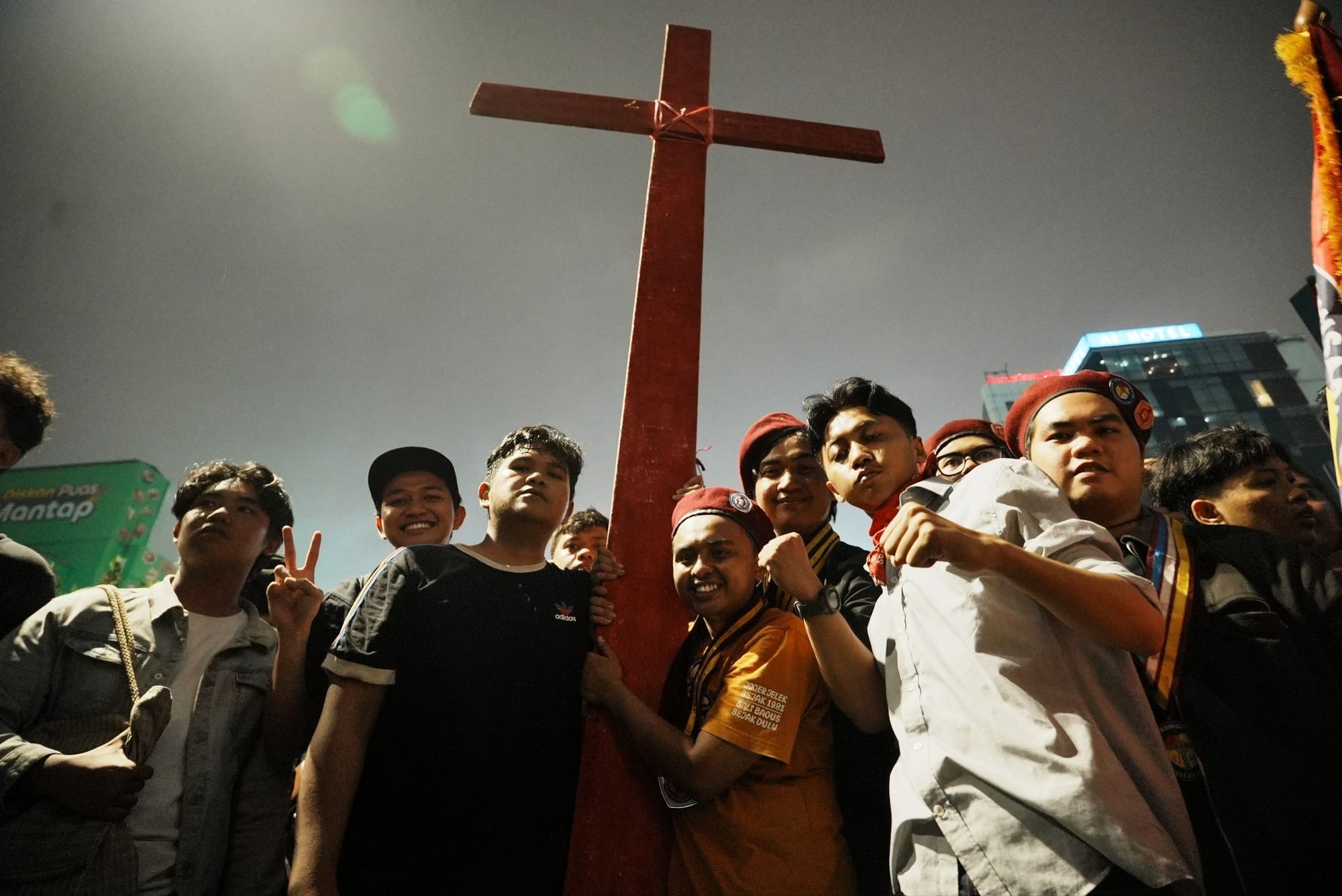
SEOUL — Thousands of university students and citizens rallied in central Jakarta on Wednesday, Oct. 28, to protest against the government on the 98th anniversary of Indonesia’s Youth Pledge Day (Sumpah Pemuda). Protesters demanded that the forest fires raging for months be declared a national disaster. They also called for an end to the Free Nutritious Meals program (MBG), President Prabowo Subianto’s signature policy.
According to the English-language daily The Jakarta Post, thousands of students and citizens from various walks of life joined the protest, titled #IndonesiaSadar (Wake Up, Indonesia). They gathered around the Welcome Statue at the Hotel Indonesia (HI) roundabout.
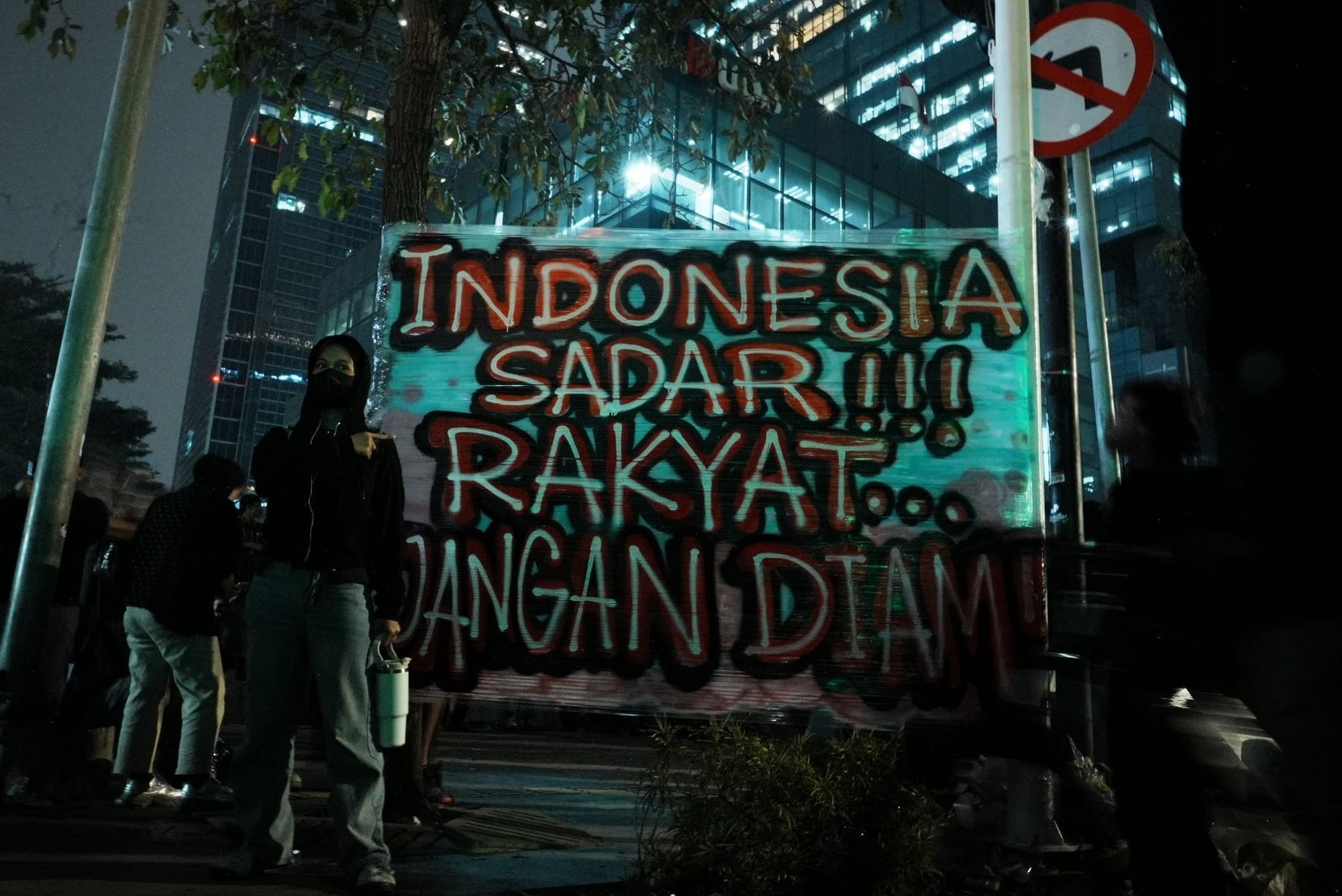
The protest was led by the Committee to Save People’s Sovereignty (Komite SADAR), a coalition of students and civil society groups. Tempo, Indonesia’s largest news weekly, reported that most participants were students from the University of Indonesia (UI), Padjadjaran University (Unpad) and the Bandung Institute of Technology (ITB). Similar protests were held in Bandung and Yogyakarta on the same day.
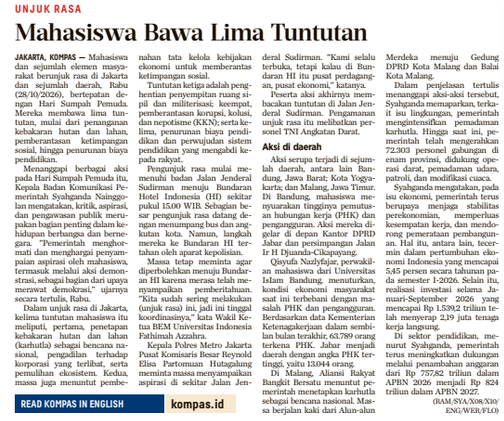
The protesters put forward five demands:
- Declare the forest fires a national disaster
- Spend the state budget on public welfare and halt the free meals program and the Red-and-White Village Cooperatives project
- Lower education costs
- Eradicate corruption, collusion and nepotism (KKN)
- Restore freedom of expression and end military involvement in civilian affairs
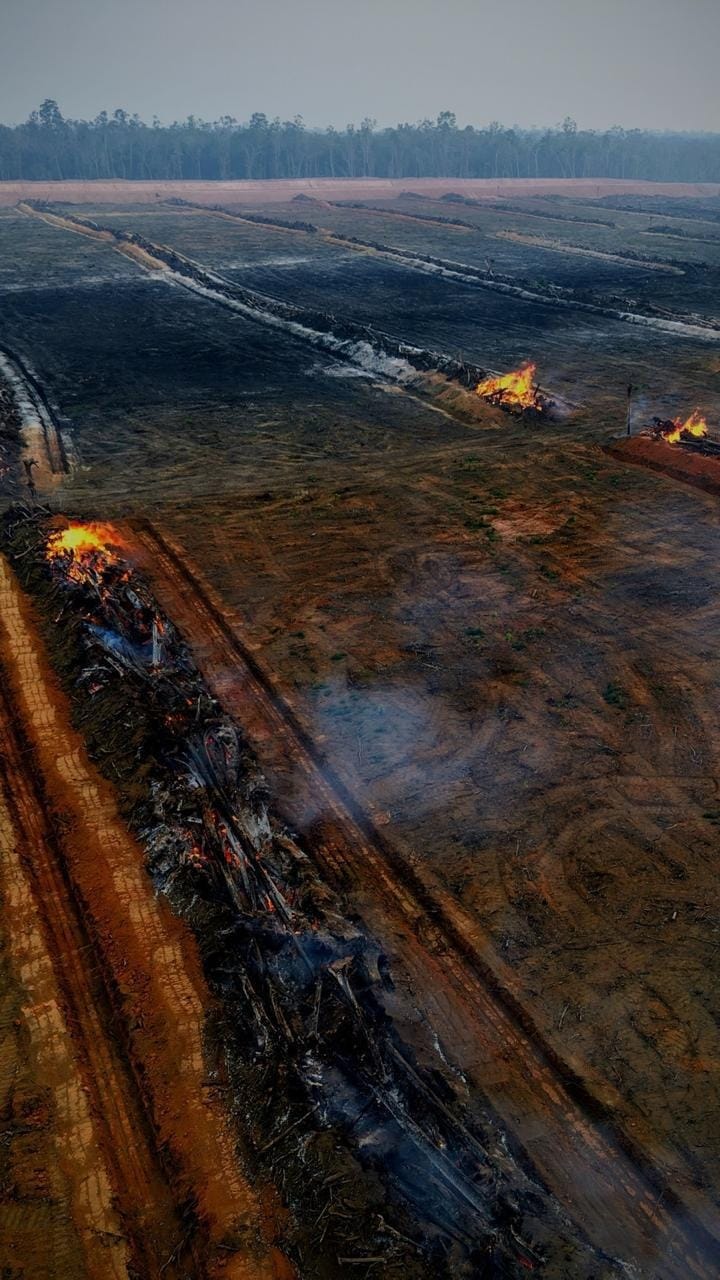
The forest fires were the central issue. According to Tempo, Yuyun Sanjaya came to Jakarta with six fellow students. He chairs the student senate at the State Islamic University of Palangka Raya in Central Kalimantan. He said he had been breathing air mixed with smoke and ash for the past four months. “Even Jakarta’s air, which is notorious for its pollution, feels fresh to me now,” he said.
Estimates of the burned area vary widely. The Forestry Ministry’s fire monitoring system, Sipongi, put the nationwide burned area at 202,004 hectares for January through July.
Greenpeace Indonesia, citing an analysis by Nusantara Atlas, said 1.9 million hectares burned between January and September. The Jakarta Post reported that the Prabowo administration has repeatedly rejected calls for a national disaster declaration, saying the fires are under control.
In this protest, students marched without their university jackets for the first time. They also traveled to the rally points separately, using public transportation. According to Tempo, Kiral Destarata explained that the goal was “to blend in with the public and become one unified line.” He heads the student executive board of Padjadjaran University’s Faculty of Social and Political Sciences.
Choosing a downtown business district instead of government buildings was another new tactic. “Even when we protested in front of the parliament or the presidential palace, the government did not listen,” said Axonzer, secretary-general of the Universitas Terbuka Jakarta student association.
Protesters were unable to enter the Bundaran HI roundabout, the fountain in front of Hotel Indonesia in downtown Jakarta. According to Kompas, Indonesia’s largest daily newspaper, the crowd filling Jalan Sudirman, a main thoroughfare in central Jakarta, was stopped by a police line at around 3 p.m. It could not move for more than 30 minutes. Behind the police, Army personnel formed a second barrier. Reynold Hutagalung, chief of the Central Jakarta Metro Police, told protesters to voice their demands on Jalan Sudirman instead, saying the HI roundabout is a center of commerce and the economy.
According to The Jakarta Post, Fatimah Azzahra, vice chair of the University of Indonesia student executive board, said, “The Army told us the HI traffic circle is their territory.” She asked: “Is it that way now because we have a former soldier as president?”
According to Tempo, police deployed 14,324 joint military and police personnel. Usman Hamid, executive director of Amnesty International Indonesia, called for an end to military deployment, saying, “Protesters are not a military threat.” The protest also forced Transjakarta, the city’s bus operator, to adjust eight routes. Four of them were suspended.
University faculty also lent their support. Sinta Ridwan, an archaeology lecturer at the University of Indonesia, announced that students in her class who joined the protest would receive extra credit. Lecturers belonging to the Campus Workers’ Union (SPK) cancelled classes for the day.
The government says it is already addressing the protesters’ demands through policy. According to Kompas, Syahganda Nainggolan, head of the Government Communication Agency (Bakom), said, “The government respects students’ expression of their views, including through demonstrations.” He said 72,303 firefighting personnel had been deployed across six provinces. As of Oct. 25, 244 individuals and 14 companies had been named suspects in forest fire-related cases, he added.
Political analyst Yoes Kenawas told The Jakarta Post, “There is a very large disconnect between reality and what the government says.” He said he was pessimistic that the protesters’ concerns would be heard. The coalition that led the protest vowed to return to the streets if the government fails to respond.
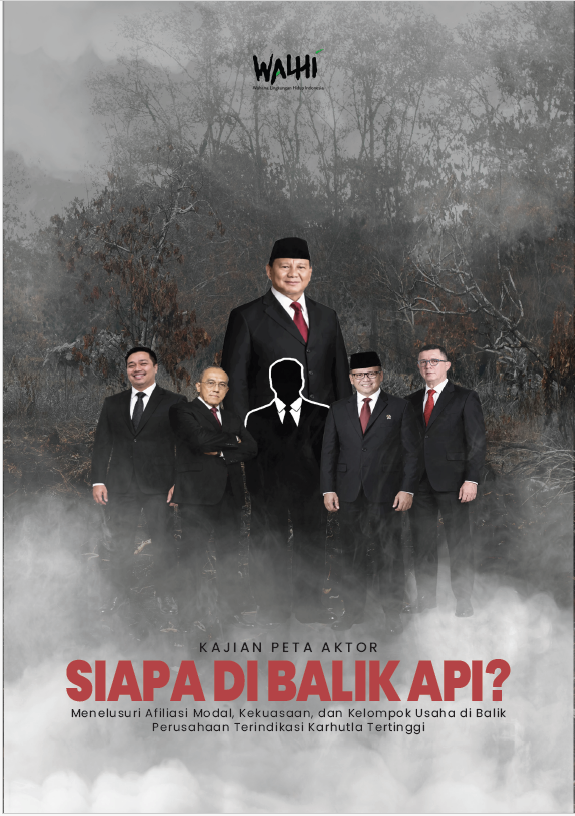
Meanwhile, the Indonesian environmental group WALHI recently released a report titled “Who Is Behind the Fire? (Siapa di Balik Api?).” It found that this year’s forest fires across Indonesia have been concentrated in plantation and forestry concessions held by large corporations.
Of the roughly 30,927 hotspots detected by satellite nationwide between January and September, about half were located inside the concession areas of forestry and palm oil companies. By region, West Kalimantan (9,529) and Central Kalimantan (7,141) recorded the most.
WALHI traced the ownership structures of the 30 companies with the most hotspots between January and August. They comprised 15 palm oil plantations and 15 forestry permit holders. Nine of the top companies were found to have shareholders or parent companies in Singapore, Malaysia, Hong Kong, or in secrecy jurisdictions such as the British Virgin Islands (BVI) and Samoa.
Some of the companies also listed close associates of President Prabowo among their executives or shareholders. They include Iwan Bomba, the president’s special envoy for the economy; officials of the ruling Gerindra Party (Partai Gerindra); and Aburizal Bakrie, a business figure from Prabowo’s presidential campaign.
Another 807 hotspots were detected in the food and energy estate in Merauke, Papua, a government National Strategic Project (PSN). WALHI pointed out that 674 of them were in areas directly managed by the Coordinating Ministry for Food and the Ministry of Agriculture, not by companies. Responsibility for the fires, it argued, lies not only with corporations but also with the state.
A Korean company also appears in the report. According to WALHI, PT Hutan Ketapang Industri in Ketapang, West Kalimantan, ranked fifth among forestry permit holders with 142 hotspots. Last November, 80% of its shares were transferred to Sampoerna Agri Resources, a Singapore-registered entity. The transfer came shortly after its parent company, Sampoerna Agro, was sold to AGPA, a subsidiary of POSCO International.
Reporting Seulki Lee (DUNIA Editor-in-Chief, Journalist) – skidolma@thedunia.org