Police wiretap of Indonesia’s President: Navy ordered to Jakarta a day before suspects named
By Seulki Lee (DUNIA Editor-in-Chief, Journalist) – skidolma@thedunia.org
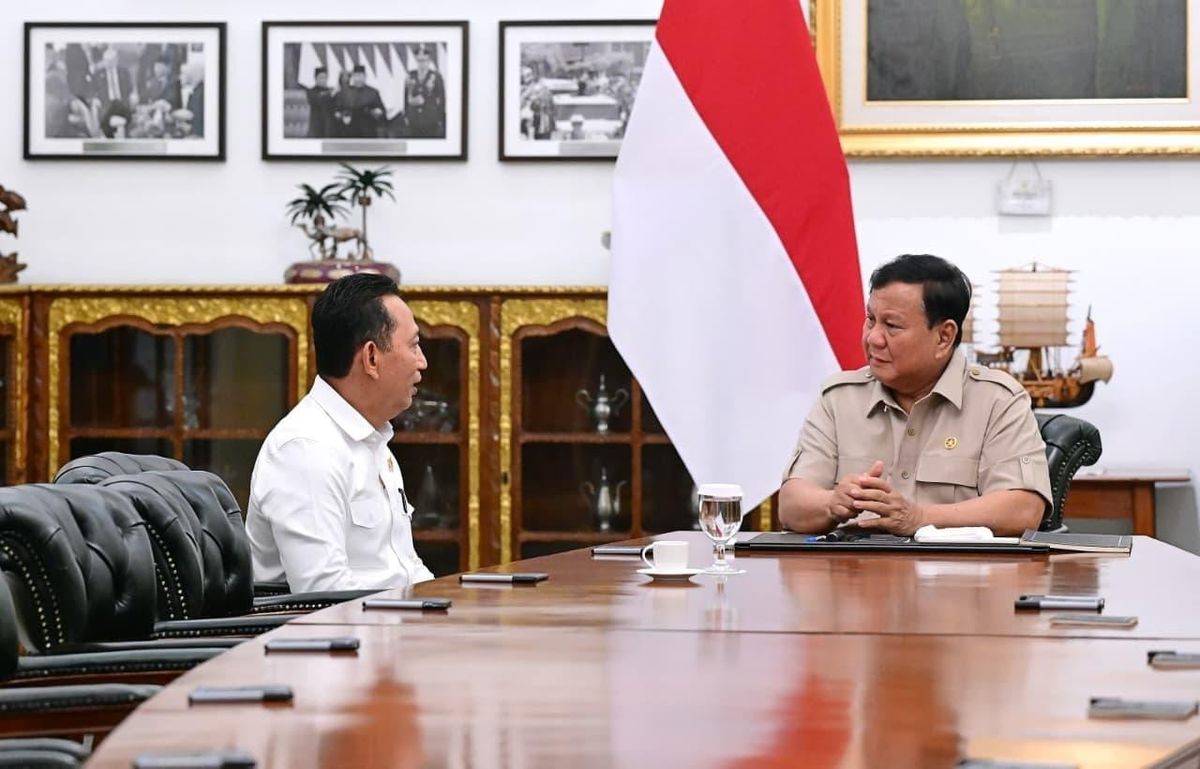
SEOUL – Senior Indonesian police officers, including the presidential chief of staff and former national police chief, are under investigation for illegally wiretapping President Prabowo Subianto, and some government officials have called the case "treason" (makar, a criminal-code term for crimes against the state). A day before police named the suspects, more than 20,000 navy personnel were ordered to deploy to the capital, Jakarta, raising questions about whether the two are linked. The military denied any connection.
According to Indonesian news weekly Tempo, the National Police Criminal Investigation Agency (Bareskrim) named three senior police officers as suspects in the wiretapping case on November 3 and took them into detention.
They are Presidential Chief of Staff Listyo Sigit Prabowo, a former national police chief with the rank of four-star general; Ahrie Sonta Nasution, head of the police legal division, an inspector general; and Eko Hadi Santoso, chief instructor at the police staff college, also an inspector general. Listyo served as national police chief until October 1, and most of the period covered by the allegations falls within his tenure in that post. He was dismissed as chief of staff the following day, November 4.
Investigators believe the suspects entered phone numbers unrelated to any investigation into the police’s Lawful Interception Management System (LIMS). They allegedly conducted wiretaps from 2025 through October 2026.
The targets went beyond the president and senior government officials. They also included party leaders, businesspeople, journalists and civil society activists.
According to Indonesian daily Kompas, the suspects ordered the wiretaps without investigators’ interception requests or case reports. They are also accused of deleting log records this October to erase traces of the activity. The purpose of the wiretapping has not yet been disclosed.
Government: “Heading toward treason” … Legal experts: “A hasty political judgment”
Some government officials have framed the case as a threat to the state and as treason under the criminal code.
According to Tempo, Syaganda Nainggolan, head of the Government Communication Agency (Bakom), said wiretapping the president was “already heading toward an act of treason” and could not be tolerated. Minister of State Secretary Prasetyo Hadi said the sensitive information obtained through the wiretaps could endanger national sovereignty. Yusril Ihza Mahendra, Coordinating Minister for Law, Human Rights, Immigration and Corrections, said there were early signs of an attempt to paralyze the president's ability to govern, though he stressed this remained an allegation. At a press conference on November 3, he said no treason provisions were being applied in the investigation.
Some legal experts have raised concerns. In the same Tempo report, Agus Riewanto, a constitutional law professor at Sebelas Maret University, said whether a crime has been committed is for investigators and courts to decide, not presidential palace officials. He explained that treason under the criminal code requires intent to overthrow the government and the commencement of acts toward that end. Wiretapping, he said, does not automatically constitute treason.
Herdiansyah Hamzah of Mulawarman University said the focus should not be shifted as if the president were the only victim, since the wiretapping also targeted civil society and activists. He also warned that the case was already having a chilling effect on citizens’ freedom of expression. By contrast, Aan Asphianto of Sultan Ageng Tirtayasa University said the treason provision could apply if a political motive to pressure the president using wiretapped information is proven.
Order to deploy 20,980 navy personnel to Jakarta a day before suspects named
A large-scale troop deployment ordered around the same time has also stirred controversy. According to Tempo, a telegram order issued in the name of TNI Commander Agus Subiyanto (Surat Telegram Panglima TNI Nomor STR/96/2026) ordered 20,980 navy personnel to deploy to Jakarta under the operational control of the Jakarta Military Regional Command (Kodam Jaya). The order is dated November 2, one day before police announced the suspects on the night of November 3.
The deployment is divided into four phases. The first phase, starting November 2, deployed 2,100 personnel from units already stationed in Jakarta. In the second phase, 3,500 personnel traveled to Jakarta by sea. In the third phase, 2,240 personnel joined the Jakarta forces overland. The remaining 13,140 from units in the Jakarta area are awaiting orders for the fourth phase. According to Kompas, the deployed units include marines, the 1st and 2nd Fleet Commands, and personnel from naval bases in Bandung, Cirebon, Lampung, Malang and Banyuwangi.
The military denied any link between the wiretapping case and the order to deploy more than 20,000 personnel. Maj. Gen. Muhammad Nas, head of the TNI Information Center, called it “routine readiness” and said it should not be connected to any particular issue. Navy spokesperson First Admiral Tunggul acknowledged the troop movement. He said it was also related to preparations for special amphibious operations training in Tangerang and surf-zone breaching training in Pandeglang.
When Kompas checked the government buildings and ministerial residence complex around Monas (the National Monument) on the afternoon of November 4, no heightened security was visible. According to Tempo, however, footage of a convoy of military command troop transport trucks heading toward the Monas area circulated on social media that night.
“An operational concept, not readiness” … Controversy over violating the TNI Law
According to Tempo, Dominique Nicky Fahrizal, a researcher at the Centre for Strategic and International Studies (CSIS), said the military’s explanation was inconsistent. Coordinating Minister for Political and Security Affairs Dudung Abdurachman had said the domestic situation was stable, so no reason had been given for a troop buildup.
He said moving troops across regions into the capital amounts to an operational concept rather than readiness. He added that, outside emergencies involving armed threats, deploying troops requires a political decision made by the state together with the House of Representatives (DPR). By contrast, TB Hasanuddin, a member of the House’s Commission I (defense, foreign affairs, intelligence and communications) from the Indonesian Democratic Party of Struggle (PDI-P), said this deployment did not require parliamentary approval.
According to Tempo, Nasir Djamil of the House’s Commission III (law, human rights and security) called for investigating even the palace officials who raised the treason allegation, to verify the basis of the government’s claims. Police have formed a special investigation team led by the head of Bareskrim. They have also left open the possibility of examining the treason allegation raised by the palace.
Reporting Seulki Lee (DUNIA Editor-in-Chief, Journalist) – skidolma@thedunia.org