The Shadow of Religion–State Collusion in Japan: From the Assination of Abe to the Dissolution Order Against the Unification Church
On July 8, 2022, in Nara, Nara City, Nara Prefecture, Japan, two bullets were fired at former Prime Minister Shinzo Abe as he delivered a campaign speech at a House of Councillors election rally. The suspect apprehended at the scene was 42-year-old Tetsuya Yamagami. Questions immediately followed, probing the unprecedented assassination of a former prime minister in Japan’s contemporary political history, with particular focus on the motive and background behind the shooting.
As the police investigation unfolded, a crucial fact about the background came to light. Yamagami was the son of a family devastated by exploitative donations to the Unification Church. He told investigators that religious contributions had bankrupted his household and played a decisive role in shaping his motive.
This revelation prompted the Japanese government to revisit the issue of predatory religious fundraising — particularly a controversy that had surfaced as a major social concern from the 1970s through the 1990s but later faded from public view following the Aum Shinrikyō terror attack in 1995.
A year and a half after Abe’s assasination, the Ministry of Education, Culture, Sports, Science and Technology petitioned the court for the dissolution of the Unification Church’s religious corporation. On March 2, 2025, the Tokyo District Court ruled in favor of the ministry’s petition and ordered the dissolution of the church’s legal status. NewsTapa and Dunia, reporting on the Unification Church extensively for months, retraced a 40-year history of religion-state collusion in Japan, collecting testimonies through on-the-ground reporting.
1960s–1970s: The Birth of the Anti-Communist Network That Carried the Unification Church into Japan
The Unification Church was officially registered as a religious corporation in Japan on July 15, 1964. The timing coincided with one of the most fervent periods of anti-communist mobilization led by Japan’s far-right political network. Behind the church’s successful entrenchment in Japan were five influential figures who served as the core bridgeheads.
Makoto Watanabe, editor-in-chief of TANSA, an independent investigative journalism outlet in Japan, argued that in South Korea, then-President Park Chung-hee and KCIA Director Kim Jong-pil, and in Japan, former Prime Minister Kishi Nobusuke, Keirin Association Chairman Sasakawa Ryōichi, and political fixer Yoshio Kodama were all key to facilitating Moon Sun Myung’s entry into Japan.
“Kishi, Sasakawa, and Kodama were all former Class-A war criminals. Park and Kim recommended the church could be used as a valuable asset for anti-communist mobilization in Japan and introduced Moon to them.”
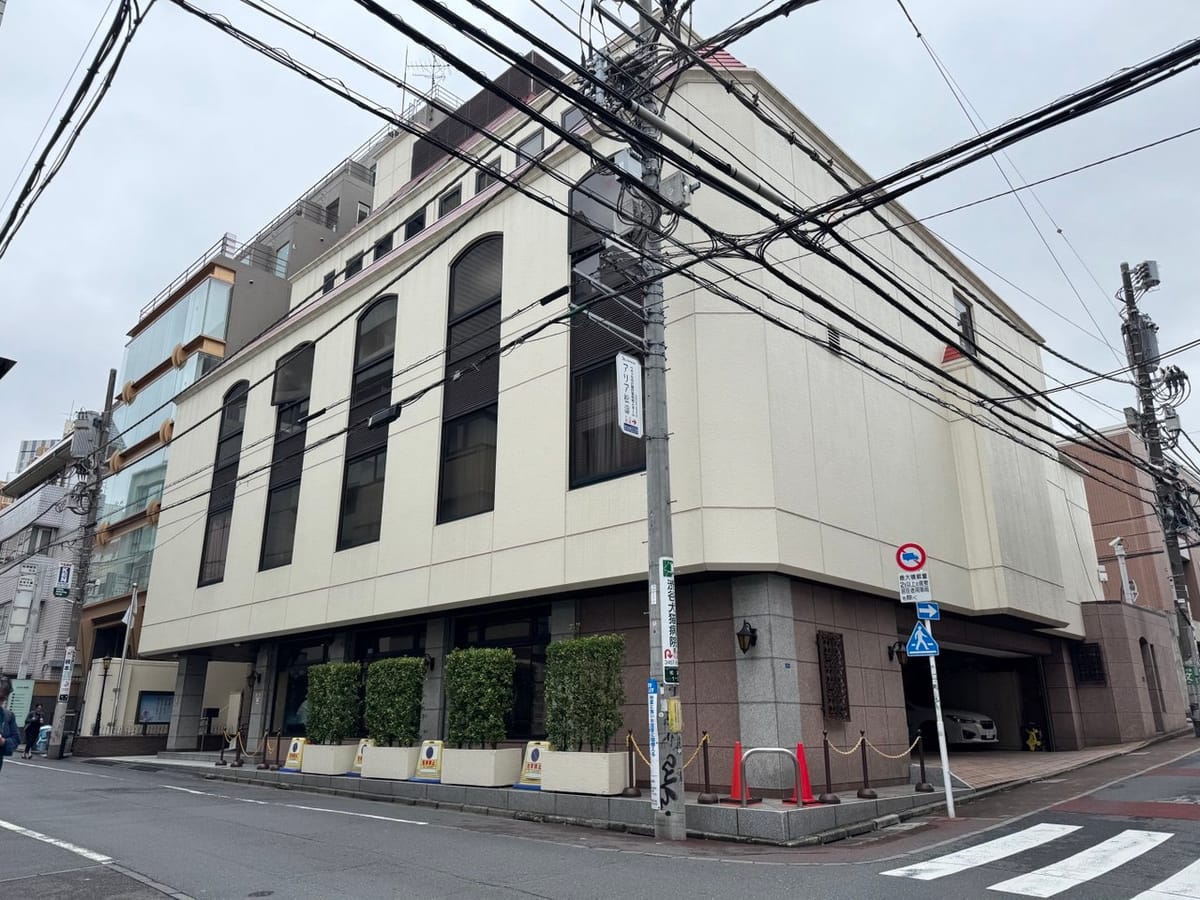
This explanation reflected the shared conviction among right-wing political actors at the time. The Japanese headquarters of the Unification Church soon opened directly across from the residence of former Prime Minister Kishi Nobusuke and grew its network of influence through Japan’s ruling Liberal Democratic Party.
In the late 1960s, Moon Sun Myung, Sasakawa, Kodama, and Chiang Kai-shek (Shō Kaiseki by its Japanese pronunciation) jointly founded the World Anti-Communist League (WACL). In 1968, the International Federation for Victory over Communism was launched with Kishi, Sasakawa, and Kodama serving as founding promoters, marking the moment when the Unification Church became part of the backbone of Japan’s conservative political campaign machinery.
1970s–1990s: The Era of “Spiritual Sales” and Predatory Donations Worth 200 billion Yen Over Ten Years
In 1977, Moon Sun Myung issued a directive for large capital transfers from the Japanese branch. The result was a nationwide surge in victims of so-called “spiritual sales” (reikan shōhō), a method of selling expensive ritual objects under the pretense of ancestor liberation and removal of bad luck.
Yoshifu Arita, a Democratic Party member of Parliament who had investigated the Unification Church more actively than any legislator in Japan, confirmed the gravity of the nationwide exploitation.
“From 1977 for 10 years, roughly 200 billion yen (approximately 1.2 billion USD) was raised through spiritual sales.”
Former pastors of the Unification Church validated these accounts through anonymous interviews.
“In the 1980s, the problem was at its peak. They sold stone pagodas modeled after Dabotap or Seokgatap of Bulguksa Temple in Gyeongju. Most of them were produced by Ilshin Stone (a company run by the Unification Church).”
Many of the donations raised in Japan were injected into international business ventures across ideological frontlines: The Washington Times (U.S.), Panda Motors (China), Pyeonghwa Motors (North Korea), Mê Công Motors (Vietnam), and more. These ventures were launched using the money extracted from Japanese households.
Over the course of 30 years, countless families were thrown into financial ruin. A single young man embodied this aggravated and forgotten social wound—that man was Tetsuya Yamagami.
Yamagami’s Motive: The Discovery of 100 Million Yen in Donations and a Family in Ruins
According to Yamagami’s testimony during the police interrogation, his mother had contributed at least 100 million yen to the Unification Church. The magnitude of the donation left the family bankrupt. He told investigators that the exploitation forced him to give up his ambition of attending university.
His earlier plan to attack Hak Ja Han-Moon, the head of the Unification Church, during her 2019 Japan visit failed. He then shifted his target to Shinzo Abe.
Yoshifu Arita, one of the most outspoken critics of Unification Church–Liberal Democratc Party collusion in Japan, provided a clear political context behind this heartbreak-turned-violence.
“Yamagami learned that Abe had deep ties to the Unification Church, that Yamagami’s grandfather Kishi Nobusuke was personally close to Moon Sun Myung, and later watched Abe praising Hak Ja Han-Moon and emphasizing family values in a 2022 UPF Peace Summit video message. That moment became the trigger.”
After Abe’s Assasination: The Japanese Government Begins Petitioning for Dissolution
On October 12, 2023, the Ministry of Education petitioned the court for dissolution. On March 2, 2025, the Tokyo District Court accepted the ministry’s request and ordered the dissolution of the Unification Church’s legal status.
The ruling found that the Church’s fundraising practices, closely intertwined with its religous doctrine, were structurally unlawful.
“The act of fundraising violates personal property rights and peace of daily life. It is ‘a substantial harm to public welfare’ as defined by Article 8, Paragraph 1, Item 1 of the Religious Corporations Act. Maintaining its legal status is highly inappropriate.”
The Unification Church’s View: “This is a Political Trial… It Violates Religious Freedom”
The church strongly resists the dissolution order.
Chang-Shik Yang, former chairman of UPF, told Dunia through a phone interview:
“Donations are merely a civil issue and contain nothing illegal. The Kishida administration changed the law overnight and used it as justification to pursue a politically motivated dissolution.”
Counsel for the Unification Church, including attorney Tatsu Nakayama, advances the same constitutional stance:
“Our organization has committed no crimes over 60 years. This is a matter of human rights and an attack on religious freedom.”
The Counter View: “The Legal Dissolution of a Corporation Does Not Limit Religious Freedom”
The lawyers’ collective representing victims of predatory religious donations challenged this constitutional assessment.
Attorney Abe, a member of the Unification Church Victims’ Relief Legal Team, confirmed to this reporter that between 2007 and 2010, executives and linked entities affiliated with the Unification Church were criminally penalized for violating commercial trade law or the Pharmaceutical Affairs Act.
Watanabe, editor of TANSA, insists that Japanese society must expand this debate beyond a single church corporation.
“Japanese society must stand alongside victims until full recovery. That moment is more important than anything. The collusion between the Unification Church and the Liberal Democratic Party also needs full-scale investigation. But most importantly, we need to prevent the rise of new organizations selling deceptive narratives the same way the Unification Church did over 40 years.”
The assassination of Shinzo Abe transcended a single act of violence and summoned back dozens of years of suppressed national questions. Japanese society is no longer centered on whether the Unification Church existed but whether the nation, which ensured its settlement as an asset of political ideology, can secure sufficient accountability for victims and public safety.
Japan is now grappling with a constitutional question: How far “religious freedom” extends, and where to draw the line in the name of “social responsibility.”
Reporting Seulki Lee - skidolma@thedunia.org
Copy Editing Chihwan Ahn