‘Moonie Money’ in Nepal’s Politics
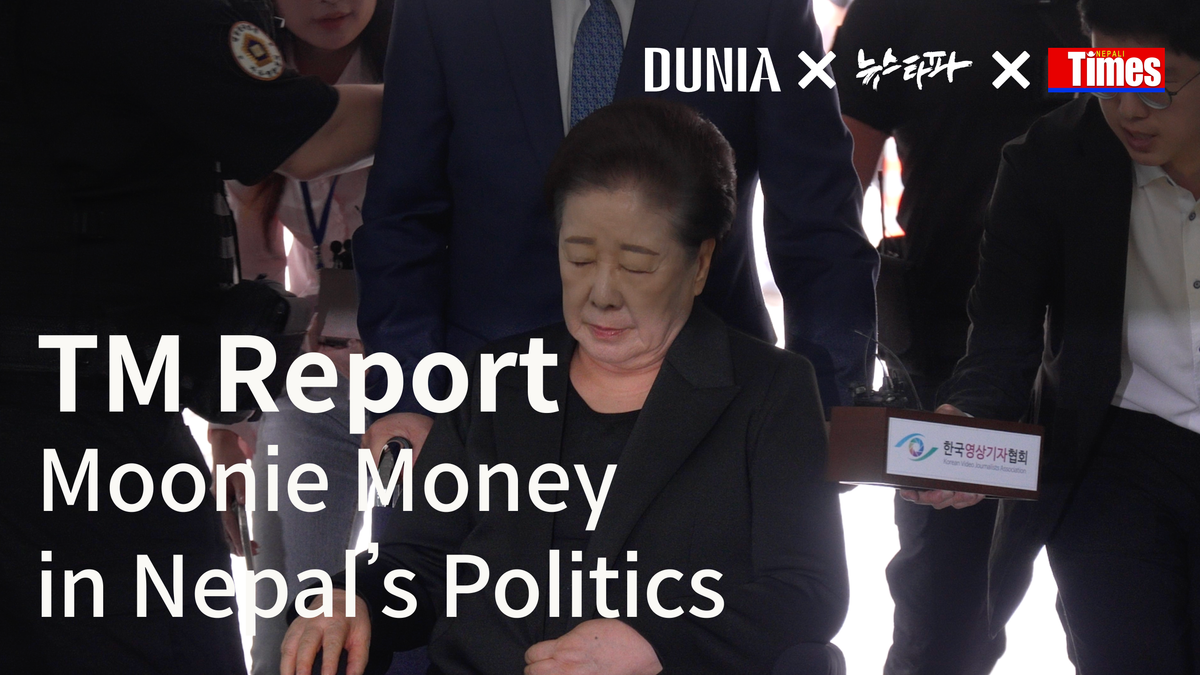
Leaked ‘True Mother Report’ Exposes Unification Church’s Political Maneuvering in Nepal and North Korean Outreach
SEOUL – Seulki Lee (DUNIA) / Kathmandu - Santa Gaha Magar
Revelations have emerged that the Family Federation for World Peace and Unification (Unification Church) has been exerting extensive influence over Nepali politics. A joint investigation by Dunia and Nepali Times of leaked internal documents—known as the "True Mother (TM) Special Report" obtained through Newstapa—confirms that the church has cultivated influential Nepali politicians to exercise political power. Furthermore, evidence suggests the church attempted to use Nepal as a backchannel to establish contact with North Korea. The documents notably imply a connection between the South Korean political sphere and Hak Ja Han Moon, the church’s leader who is currently facing bribery charges, pointing to significant potential repercussions.
‘Moonie Money’ Sprinkled on General Elections and Proportional Representation Deals
According to the documents, the Unification Church exchanged correspondence regarding financial support with major political parties and figures in Nepal. This includes three former Prime Ministers: Madhav Kumar Nepal, K.P. Sharma Oli, and Baburam Bhattarai. Ek Nath Dhakal, a Member of Parliament and President of the Nepal Family Party—a staunch ally of the Communist Party of Nepal (Unified Marxist–Leninist, or UML)—even signed a Memorandum of Understanding (MoU) with UML Chairman K.P. Oli for cooperation in the upcoming March 2026 elections and beyond.
The correspondence found in the leaked documents spans from the first federal elections in 2017 to the general elections in 2022. These letters, sent by Dhakal and Yong Jeong Shik (Regional President of FFWPU Asia) to Yun Young Ho, the then-Director General of the FFWPU International Headquarters, contain urgent requests for election funds and support for the UML.
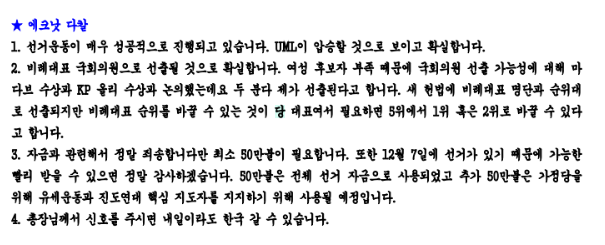
In a letter dated November 30, 2017, Dhakal’s side sent a message to Yun stating, "I apologize for making a funding request, but we need at least USD 500,000." The letter continued, "With the election imminent on December 7, we would appreciate support as soon as possible. The initial USD 500,000 has been exhausted on overall election costs, and an additional USD 500,000 is for the Family Party’s campaign and supporting key leaders." Additionally, correspondence was found requesting an additional USD 20,000 monthly under the guise of "Nepal Family Party maintenance and 2022 election preparation reserves."
Ek Nath Dhakal has previously denied allegations linking his party's alliance with the UML to Unification Church funds. In an interview prior to his ministerial appointment in 2017, he clarified, "Our party is connected to all faiths, not just the Unification Church movement," adding, "The Nepal Family Party is a conservative party promoting family values and inter-religious dialogue, and is merely one of the 11 parties supporting Prime Minister Oli."
However, in another report sent to Yun Young Ho or Han Hak Ja, Dhakal reported that the 2017 UML election campaign was "very successful and a landslide victory is certain." Despite not running as a constituency candidate, Dhakal was placed on the UML’s Proportional Representation (PR) list, which appears to be in correlation with the provision of the election funding. He wrote, "Due to the female candidate quota, it is certain I will be elected as a PR member," adding, "Former Prime Ministers Madhav and Oli discussed my electability and confirmed that, if necessary, they could adjust my ranking from 5th to 1st or 2nd." Indeed, following the 2017 election, the UML formed a coalition government, and Prime Minister Oli appointed Dhakal as the Minister of Peace and Reconstruction.
Ambitions for a ‘Cheon Il Guk’ Constitution and the ‘Holy Wine’ Controversy
The Unification Church’s intervention in Nepali politics was not merely about securing parliamentary seats. In the documents, Dhakal stated, "Our wish is to secure a majority in next year's general election, provide ideological training to all members of parliament by 2020, and create a constitution centered on ‘Cheon Il Guk’." Cheon Il Guk refers to the Unification Church's ideal of realizing a world where humanity is one family under "Heavenly Parent."
These ambitions culminated in the ‘Asia-Pacific Summit’ presided over by Han Hak Ja in 2018. However, the event faced criticism for being a proselytizing event for a specific religion, and the term "Holy Wine" became a derogatory slang term in Nepali politics used to mock pro-Unification Church politicians. Despite this, the church persistently attempted to educate politicians, even planning to take all 150 coalition party lawmakers to Bangkok for doctrinal training.
Since this incident, "Holy Wine" has become established slang within Nepali political circles, used to disparage figures such as K.P. Oli, Madhav Kumar Nepal, and Ek Nath Dhakal.
The Paradox of an Anti-Communist Group: The ‘Pyongyang Project’ via Nepal
Most notably, the documents reveal that the Unification Church—a widely known anti-communist organization—attempted to contact North Korea through Nepal’s communist leaders. The documents emphasized a close relationship with former Prime Minister Madhav Kumar Nepal, describing him as "a person who regards True Parents like God."
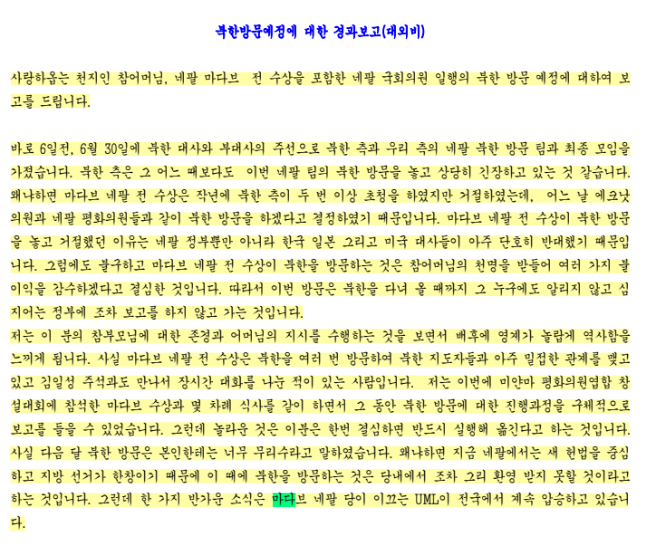
The church pushed for a visit to North Korea through Madhav, who was then the UML Chairman, but the plan was initially blocked by the Nepali government following pressure from the South Korean, Japanese, and U.S. ambassadors. Undeterred, Dhakal and Madhav met with Jo Yong Man, the then-North Korean Ambassador to Nepal, to plot a visit under the pretext of "Korean Peninsula Unification." While Madhav reportedly requested a meeting with Kim Jong Un, the North Korean side expressed reluctance. Later, after forming a separate party, Madhav met with the North Korean ambassador again with Dhakal present to discuss the visit. Consequently, a Nepali delegation of 11 people actually visited North Korea in 2017, demonstrating the church's attempt to establish an independent line to the North by mobilizing foreign politicians.
Unification Church Claims ‘TM (True Mother) Report’ is Yun Young Ho’s Unofficial Record
The 3,212-page internal document obtained by Dunia via Newstapa is believed to have been written by Yun Young Ho, the former Director General and second-in-command, to report to Han Hak Ja. During legal proceedings, a church official admitted to personally writing sections of the document.
In response, the Unification Church denied the contents, stating the document is "an unofficial record written by former Director General Yun Young Ho to show off his influence" and that "content differing from the facts was added or modified." Ek Nath Dhakal also denied allegations of involvement with church funds in past interviews, stating, "The Nepal Family Party is just one of the parties supporting Prime Minister Oli."
Nepal Family Party: "Current Allegations are Merely a Smear Campaign"
Govinda Nath Mishra, spokesperson for the Nepal Family Party, told Nepali Times and Dunia, "Raising these suspicions is nothing more than an unnecessary smear campaign targeting our party. In Nepal, there is a tendency to frame successful parties as being backed by foreign forces to undermine them."
He added, "President Ek Nath Dhakal has already served two terms as a member of the House of Representatives, and the Family Party has maintained a close relationship with the UML since its inception. We are simply continuing our cooperative relationship in this election as well."
However, Ek Nath Dhakal is currently not responding to reporters' inquiries regarding the specific details contained in the leaked report.
Reporting Seulki Lee - skidolma@thedunia.org
Copy Editing Chihwan Ahn - chihwan@thedunia.org