Another Rohingya Boat Tragedy: When Desperation Meets the World’s Silence
By Niyamot Ullah
The Rohingya are widely recognized as one of the most persecuted communities in the world. Since 1784, Rohingya Muslims have endured systemic discrimination and violence in Myanmar, escalating into genocidal campaigns.
The most devastating of these was the Rohingya Exodus 2017, when the Myanmar military carried out widespread atrocities such as killings, sexual violence, and the burning of entire villages. As a result, more than 700,000 Rohingya fled to Bangladesh, seeking safety.
Today, they remain confined to refugee camps in Cox’s Bazar, the largest refugee settlement in the world. These camps, built on fragile hilly terrain, are severely overcrowded and plagued by food shortages, limited healthcare, insecurity, and rising incidents of kidnapping.
In recent months, humanitarian conditions have worsened significantly. Food assistance has been reduced to just USD 7 per person per month starting April, an amount far below what is needed for basic survival. With no legal status, limited opportunities, and an uncertain future, many Rohingya are increasingly forced into desperate decisions risking their lives on perilous sea journeys in search of safety and dignity.
A Deadly Journey to Nowhere
A humanitarian catastrophe is feared after a Malaysia-bound trawler, reportedly carrying more than 280 trafficked Rohingya, capsized near the Andaman Islands. The vessel departed from Teknaf on 4th April 2026, carrying more than 280 Rohingya refugees hoping to reach Malaysia.
After enduring days of extreme overcrowding, abuse, and deprivation at sea, the boat tragically sank near the Andaman Islands on April 9, 2026.
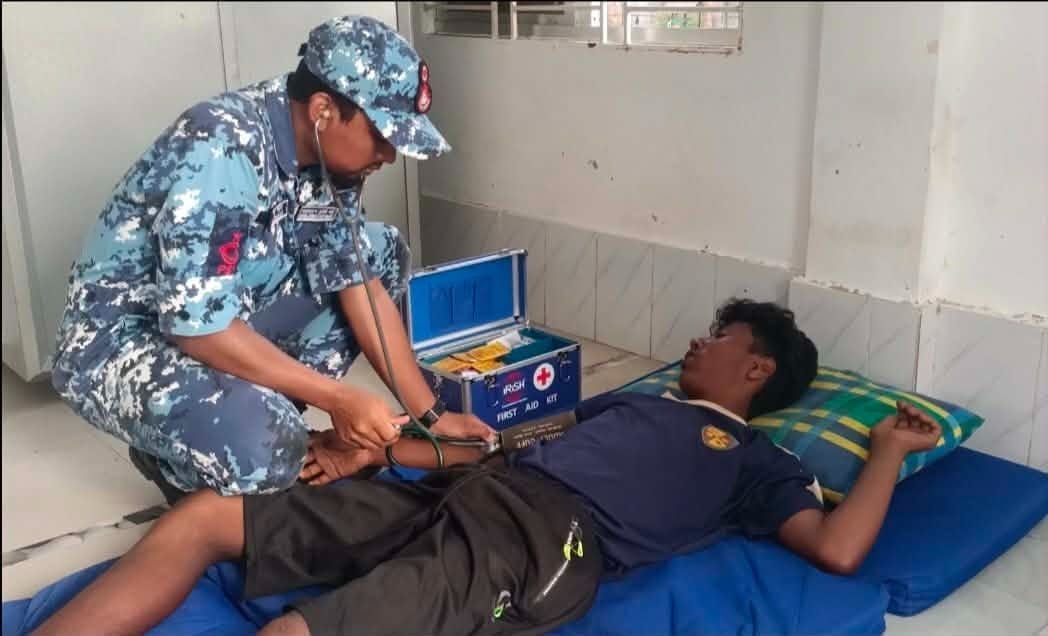
The incident came to light after nine survivors were rescued from the sea. According to a press release, the Bangladesh-flagged vessel MT Meghna Pride, traveling from Chattogram to Malaysia, rescued eight men and one woman from deep waters on April 9. They were later handed over to a Bangladesh Coast Guard patrol ship.
Survivors’ Testimonies: Trafficking and Abuse
Survivors described a horrifying journey shaped by human trafficking and violence. One survivor, Rafiqul Islam, said he was lured with a job offer from Kutupalong Bazar on 2nd April 2026. He was then taken to a house in Teknaf, where he and 20 to 25 others were detained in inhumane conditions.
According to him, victims were beaten when they attempted to escape, and multiple houses were used to confine trafficked individuals. On the night of April 4, they were moved to the coast and transported in stages onto a larger fishing trawler near Saint Martin’s Island, close to Myanmar waters. Eventually, around 280 people including traffickers and crew members were packed onto the vessel.
As the journey progressed, conditions became unbearable. Survivors reported that traffickers forced passengers into cramped storage compartments meant for fish and nets. Due to severe overcrowding and lack of oxygen, an estimated 25 to 30 people died from suffocation. “They threatened to sink the boat if we refused to move,” Rafiqul recounted.
Fighting to Stay Alive
Another survivor, Md Imran, described the moment the trawler capsized: “When we reached near the Andaman Sea, the boat sank. I held onto a water tank and fought for my life for two days before being rescued.” He added: “I still cannot process how many people died. Living with this memory is extremely painful.”
Rafiqul survived by clinging to a plastic water bottle, drifting in the open sea until rescue arrived. The total number of victims remains uncertain.
This tragedy is not an isolated incident, it reflects a deeper, ongoing humanitarian crisis. Decades of persecution, statelessness, and deteriorating conditions in refugee camps have left the Rohingya with few options for survival. Without access to education, livelihoods, or legal protection, many fall prey to human traffickers who exploit their desperation.
As humanitarian aid continues to decline and conditions worsen, the risk of further tragedies at sea grows. The Rohingya crisis demands urgent global attention. Without meaningful intervention, ensuring safety, rights, and dignified living conditions such devastating incidents will continue to unfold in silence.
Reporting Niyamot Ullah
Niyamot Ullah is a Rohingya refugee and a chemistry teacher currently living in the Cox’s Bazar refugee camps.