Korea vs. Southeast Asia: Conflict Escalates on X with #SEAblings Movement
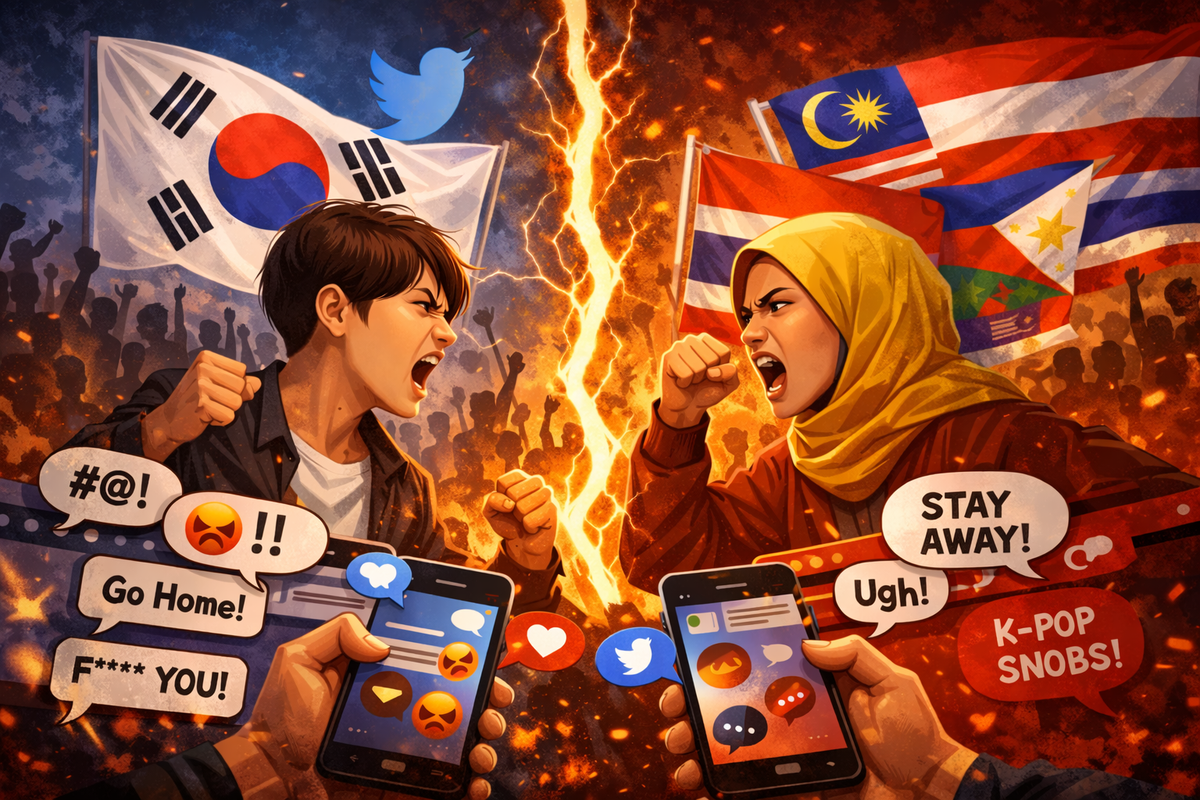
A fierce conflict has been escalating on social media for the last week, particularly on X (formerly Twitter), between South Korean and Southeast Asian users. What began as a minor dispute over concert etiquette at a K-pop event in Malaysia has spiraled into a heated exchange of mutual vitriol and cultural derogation. Dunia breaks down the timeline from the initial spark to the current standoff.
1. The Spark: "Why Bring 'Cannon' Cameras Against Regulations?"
The controversy ignited on January 31, 2026, during a concert by the South Korean band ‘DAY6’ at the Axiata Arena in Kuala Lumpur, Malaysia.
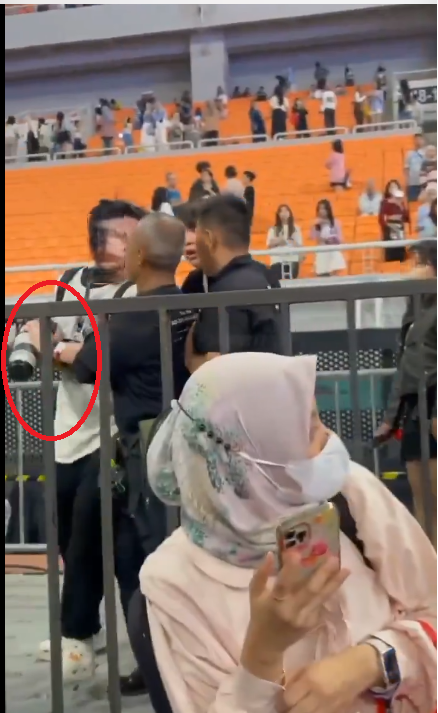
While venue regulations strictly prohibit professional DSLR cameras with telephoto lenses (commonly referred to as "cannon cameras"), some Korean fans smuggled them in to take high-quality photos. Local fans expressed frustration, noting that these large setups obstructed their view and violated the rules.
Footage circulated on X showing a confrontation between a Korean fan holding a DSLR and local attendees, which eventually led to the fan being escorted out by security.
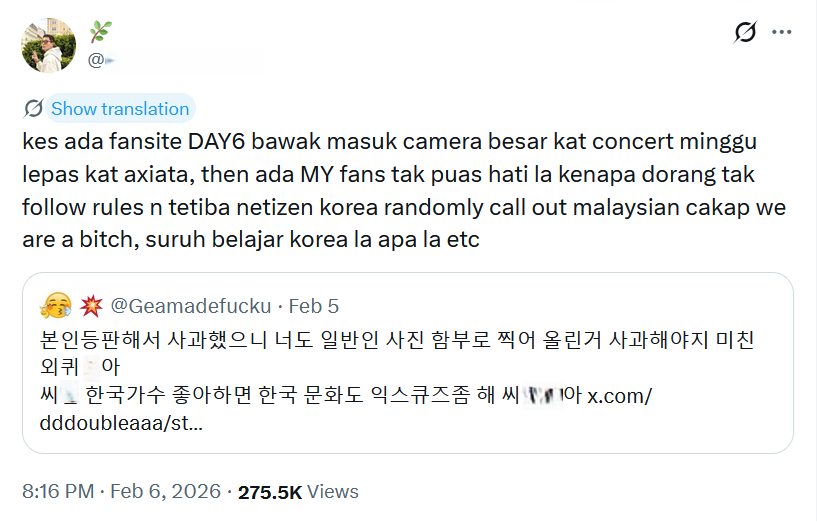
One Malaysian attendee posted: "Korean fansites brought forbidden cameras and inconvenienced others; their rudeness was infuriating." When this post gained traction, Korean netizens counter-argued that locals should "respect Korean idol fan culture," triggering the first wave of friction.
2. Escalation: A United Southeast Asia Responds to Disdain
The issue shifted from simple etiquette to a broader cultural clash when some Korean X users began posting derogatory remarks targeting Southeast Asians.
Netizens from Indonesia—who have historically had friction with Malaysia over traditional fabric art "Batik" origins and other cultural issues—unexpectedly joined forces with Malaysians. They argued that the logic used by Koreans to "educate" Southeast Asians on culture was flawed, even using translation tools to fire back in Korean.
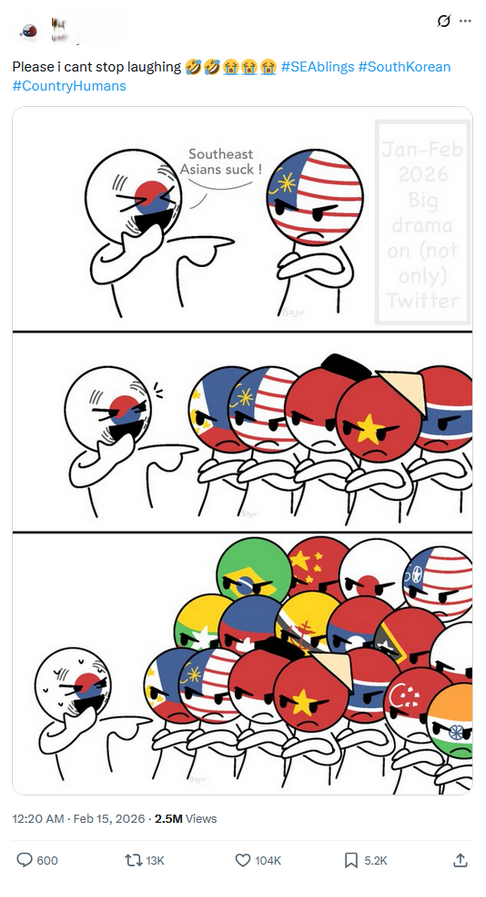
As the response from some Korean users turned into a generalized attack on the entire region—including the use of highly offensive imagery, such as comparing Indonesians to orangutans—X users from Thailand, Vietnam, and the Philippines joined the fray. The conflict solidified into a "Korea vs. Southeast Asia" narrative.
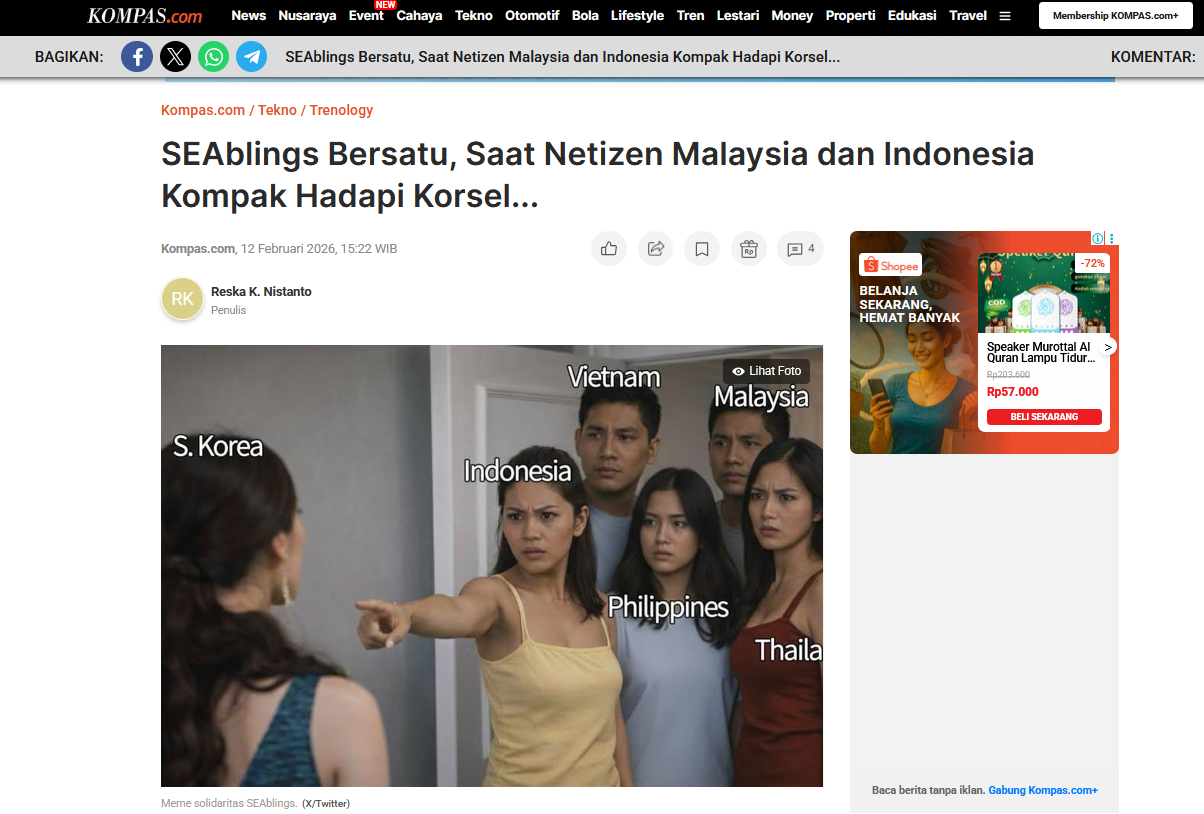
The tension reached mainstream media, with Kompas, Indonesia’s largest daily, running a headline: "Southeast Asian Siblings Unite: Malaysian and Indonesian Netizens Stand as One Against Korea."
3. Current Status: Rice Quality vs. Plastic Surgery... The '#SEAblings' Counterattack
The dispute has now devolved into a "digital border war" filled with racial slurs and national insults.
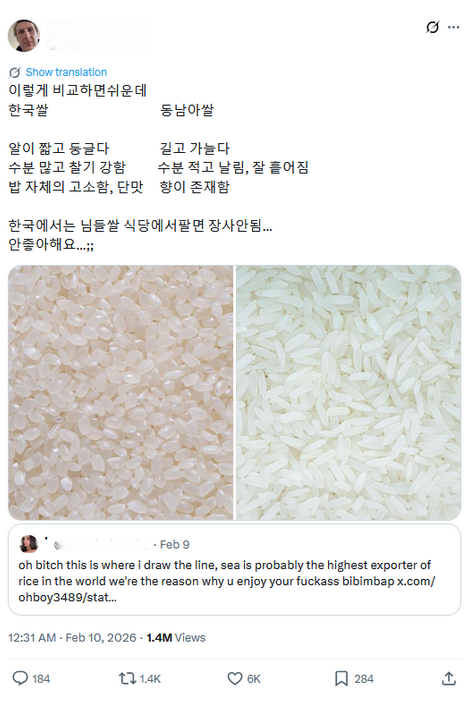
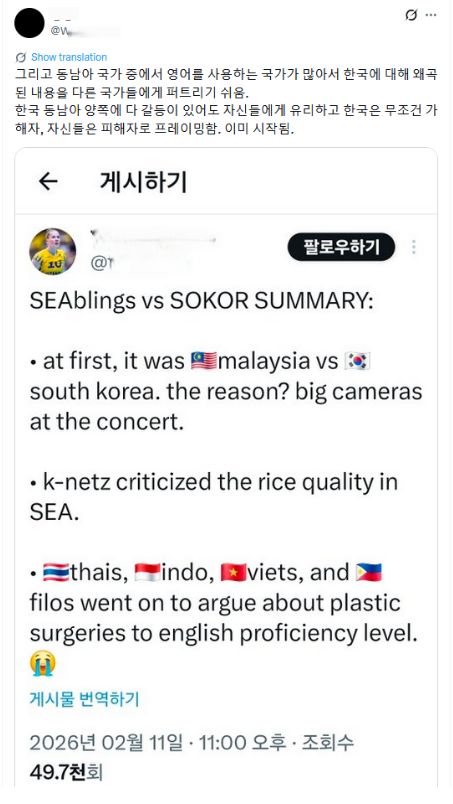
Southeast Asian X users are displaying powerful solidarity using the hashtag #SEAblings (a portmanteau of Southeast Asia + Siblings). According to local observers, when Korean netizens began mocking the quality of Southeast Asian rice, #SEAblings responded by targeting South Korea's high rates of plastic surgery and criticizing their English proficiency.
4. The Roots of '#SEAblings': From Political Solidarity to Anti-Hate Movement
Crucially, the #SEAblings movement was not born from this incident. It originated in September 2025 as a socio-political alliance during pro-democracy protests and delivery driver (ojol) strikes in Indonesia. At that time, youth from neighboring countries like Thailand supported Indonesian protesters with supplies and digital advocacy.
While the "Milk Tea Alliance" (comprising Hong Kong, Thailand, and Myanmar) focused on anti-authoritarianism, #SEAblings this time has evolved into a shield against external hate and "cultural superiority."
The offensive posts by some Korean X users have effectively acted as a boomerang. By failing to recognize the deeply rooted solidarity of the #SEAblings movement, these individuals have turned a minor concert grievance into a regional controversy, exposing a lack of cultural sensitivity that now threatens the image of K-content in its most vital markets.
Reporting Seulki Lee - skidolma@thedunia.org
Copy Editing Chihwan Ahn - chihwan@thedunia.org