The Flood of Accountability: Systemic Failures Behind Hat Yai’s Tragedy
By Veena Thoopkrajae, a former editor of Thai English daily <The Nation>
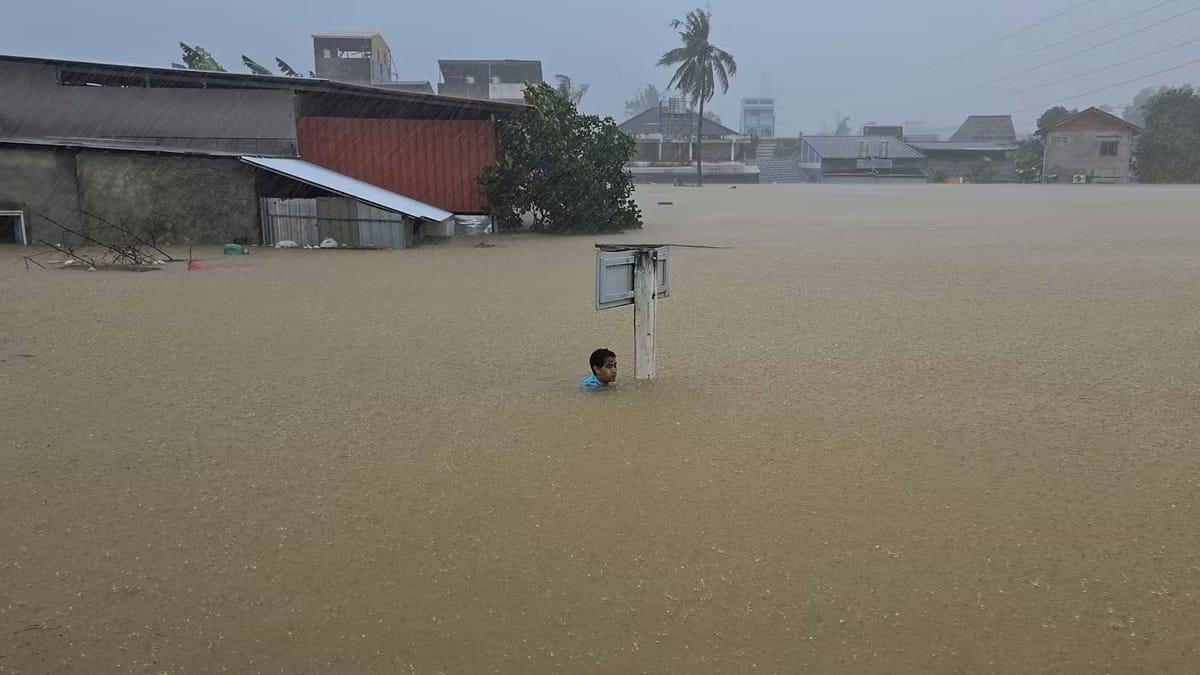
The catastrophic floods that overwhelmed Thailand’s southern provinces have done more than submerge streets and homes — they have exposed systemic fragility in national and local disaster governance. Nowhere was this clearer than in Hat Yai, the region’s largest commercial hub and a strategic economic and transport gateway bordering Malaysia.
This disaster was not simply caused by unprecedented rainfall. It was enabled — and amplified — by leadership failures, unregulated urban expansion, deficient emergency resources, and dangerously unreliable public communication.
Planning for a Crisis That Never Came
Urban Growth Without Guardrails
Experts have cautioned for decades that Hat Yai’s accelerated urban growth, particularly around the U-tapao canal, threatened the city’s natural drainage shield. Those warnings were repeatedly dismissed, leaving outdated infrastructure to absorb ever-growing flood risk. The engineering limitations of Khlong Phuminat Damri (R.1 canal) were inevitable, yet unaddressed. The system was overwhelmed not only by water volume, but by the absence of resilience planning.
A City With a Budget, But No Boats
Emergency Equipment Deficit
When the waters finally receded, Mayor Narongporn Na Phatthalung justified criticism by noting he had been in office for only four months, and that the municipality held “fewer than five boats — all obsolete.” This defense rang hollow against the city’s vulnerability and economic profile.
Local reporter Darin Nicha, a Hat Yai native, voiced the anger shared widely by residents: “It is unbelievable for a major commercial hub with substantial budget to lack crisis-grade assets. They don’t even have jet skis or enough boats to respond properly.”
Darin’s assessment underscores a more uncomfortable truth — the city’s emergency insufficiency was not circumstantial. It was structural.
Green Flags, Red Alerts
The Deadliest Failure: Communication
With political pressure building around House dissolution and an imminent general election, bureaucratic rotations of key officials collided with disaster planning timelines. But it was communication failure that proved most devastating.
Hat Yai’s flood warning system still centered on a rudimentary flag signal. When the water mass hit, that flag remained green. The mayor echoed the signal’s false comfort, assuring residents the situation was “under control” hours before the deluge. The result was paralysis — and loss that could have been avoided.
One survivor’s testimony summed up the anguish: “People didn’t move their belongings because they trusted the municipality, which said there was no need. They told us everything would be fine.”
That trust was broken at the moment it was needed most.
Accountability Without Answers
Government Response Under Scrutiny
Prime Minister Anutin Charnvirakul made a rare public admission of responsibility: “The government is at fault… I acknowledge that. It is all the Prime Minister’s fault.”
Yet accountability has not followed with equal gravity. The official death toll has been disputed. Survivors waited in lines for days to receive the modest 9,000 THB household relief package. Their frustration soon turned bitterly personal:
“They can come to our homes during elections. Why not now?” one resident asked, reflecting the gap between political visibility and civic protection.
Total Loss, Partial Recovery
Human and Economic Cost
As of early December, the Ministry of Public Health confirmed 145 deaths in Hat Yai alone, part of 270 fatalities across the southern floods. Economic consequences are equally severe. The Songkhla Chamber of Commerce assessed a 20 billion baht (US$550M) economic loss in the city, projecting recovery to stretch at least three months — erasing the high-spending festive season.
For many residents and small business owners, recovery is impossible. Hardware worth over a million baht was destroyed at the Obstetrics & Gynecology clinic operated for 18 years by Dr. Somnuek Veeranarapanich MD. “I was shocked to see the state of my clinic after the flood,” he said, announcing permanent closure.
Another local restaurateur offered an even simpler lament — “I’m too old to start again.”
After the Water, the Bills
Chaotic Recovery
Even the emergency aftermath mirrored the chaos of the warning phase. Residents paid 1,500 THB for 2,500 liters of clean water simply to wash mud from their homes. Critical healthcare services were paralyzed, and Hatyai Hospital suffered such devastation that renovation is estimated to cost one billion baht. The hospital itself required emergency rebuilding assistance.
What Comes Next Cannot Be a Flag
Call for Independent Inquiry
This disaster demands more than apologies. Thailand needs an independent fact-finding coalition insulated from political cycles. Disaster planning should not dissolve with parliament nor campaign with ministers. Resilience must be structural, not symbolic.
For the citizens of Hat Yai, wounds run deeper than floodwater. Accountability must now rise higher than 3 meters — higher than campaign podiums — and last beyond the news cycle.
Only then can Thailand ensure a “flood of the century” is never again a tragedy manufactured by neglect.
Veena Thoopkrajae is a former editor of Thai English daily <The Nation>.