The Invisible City: Life Beneath Delhi’s Rising Skyline
By Bilal Handoo
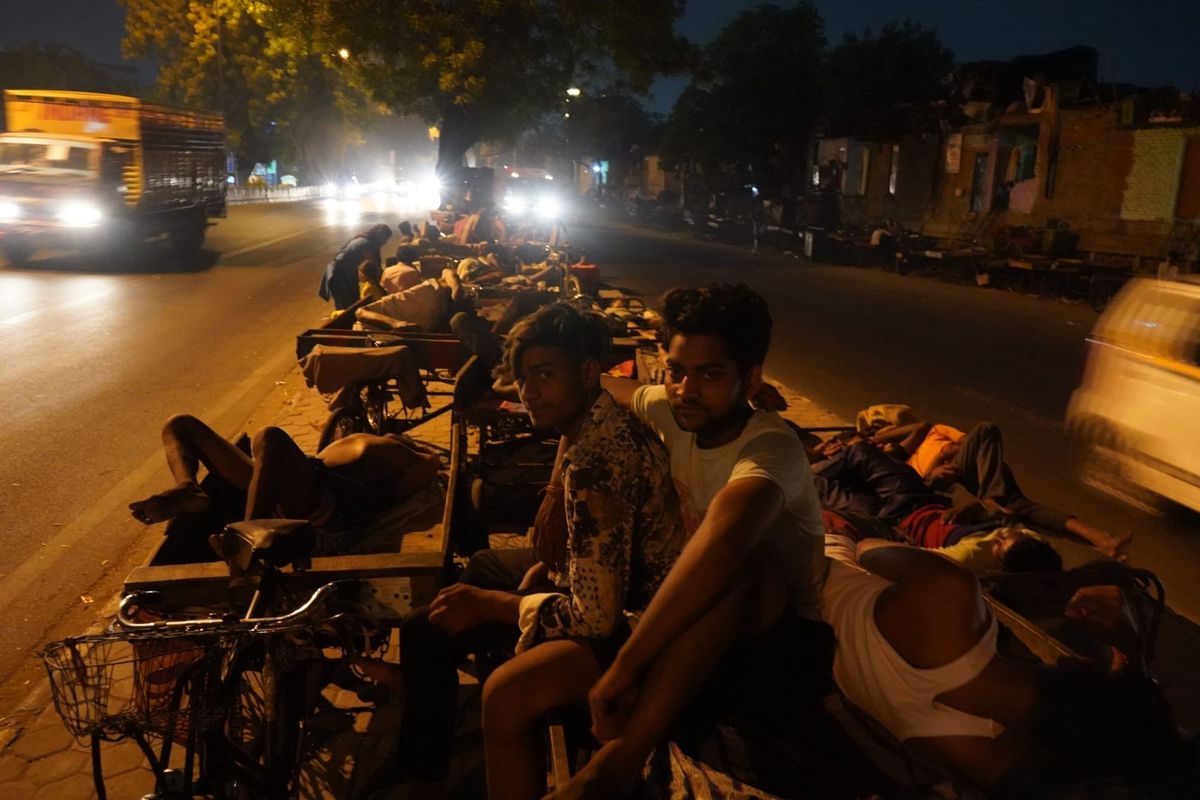
New Delhi – The sun has not yet cleared the haze when Ramesh Yadav wakes up inside a tin shed that measures eight feet by ten. The roof is corrugated metal, the type that turns into a furnace by noon and a drum during monsoon rains.
It is March, which means Delhi is still pleasant, but Ramesh knows that in two months, this shed will become unbearable.
Last June, he faced the temperature inside at 47°C. The fan, when the generator works, only pushes hot air around.
Ramesh is 34 years old, and comes from a village in Bihar’s Madhubani district. He has been building homes in India’s capital city for 11 years now. Unlike the one he sleeps in, he constructs homes with marble floors, Italian modular kitchens, and swimming pools on the roof. These lavish houses sell for thirty, forty, even fifty millions of rupees. He will never enter these Delhi dens except through the service entrance, carrying cement on his back.
He rolls off his wooden pallet, splashes water on his face from a shared tap, and walks 50 meters to the construction site where a 22-storey residential tower is rising. By seven in the morning, he is mixing concrete. By noon, he has earned his daily wage of INR 400. This is below the government-mandated minimum of INR 695 for unskilled construction work, but Ramesh does not complain. Complaining means no work tomorrow. There are always younger men waiting at the labour chowk, willing to work for less.
Ramesh sends INR 3,000 home every month to his wife and two children. That leaves him with roughly INR 9,000 for his own survival in a megacity. His accommodation is free, provided by the contractor, which is why he accepts the tin shed. But free housing comes with conditions.
There is hardly any privacy, security or rights there. When the project finishes in eight months, the shed comes down and Ramesh moves on. He has lived in 17 different locations in 11 years.
Delhi Housing Costs: Ten Times a Construction Worker's Income
The city has an estimated 800,000 to 1 million construction workers, most of them migrants from Bihar, Uttar Pradesh, Jharkhand, and West Bengal. They build the capital’s skyline while remaining invisible to its housing system. The irony is architectural. These workers construct permanent homes for others while living in the most temporary conditions themselves. (Related Story: Asian Cities’ Unaffordable Housing Equation)
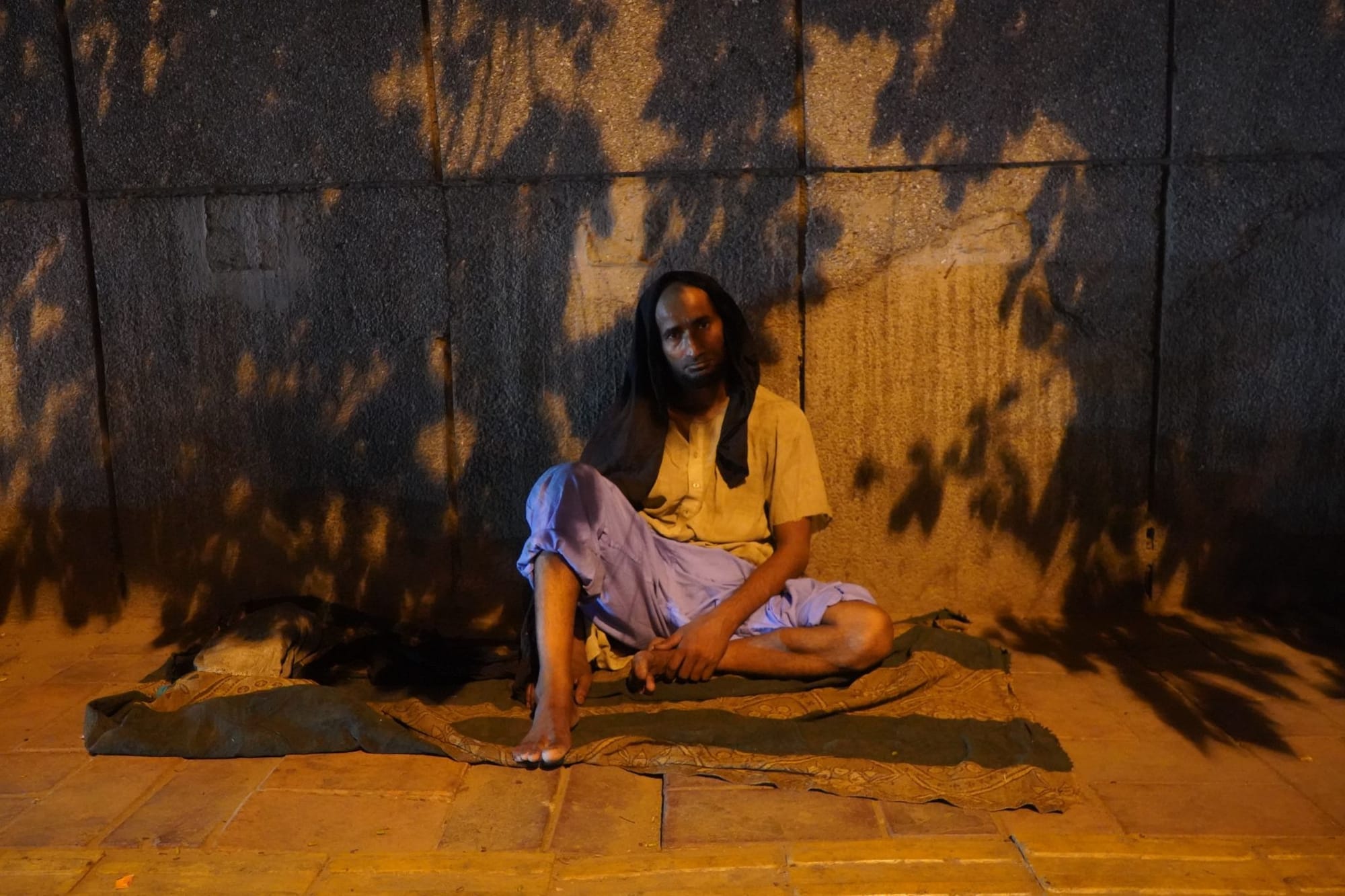
Ramesh was at a construction site in Dwarka, on the western edge of Delhi. The tower he is building will contain 96 apartments. The smallest unit, a two-bedroom flat, is priced at INR 25 million. When the reporter told Ramesh this number, he laughed. Then he asked how many zeroes are in a million. When the reporter explained, he fell silent. He earns roughly INR 120,000 in a good year. The cheapest apartment in the building he is constructing would cost him 230 years of savings. Even if he saved every rupee and spent nothing on food.
The housing market in Delhi has become a machine for exclusion. Property prices in the National Capital Region rose by 11 percent in the past year alone, reaching an average of INR 8,000 per square foot. The price-to-income ratio in the national capital stands at 10 point one, which means the average home costs more than 10 times the average annual household income. Globally, anything above five is considered unaffordable. Delhi is nearly double that threshold.
But these numbers do not capture the reality for people like Ramesh. The housing market does not exist for him. It is not that it is expensive. It is not for him. The formal rental market requires deposits, documentation, and references. The affordable rental housing complexes promised by government schemes remain largely on paper.
'Dormitories' That Cost Half a Worker's Income
A 2025 study by housing researchers found that the few existing hostels for migrant workers charge INR 3,600 per month including meals, which is beyond Ramesh’s budget. The alternative is what researchers call the informal rental market, which operates in the shadow economy of unauthorized colonies and urban villages.
One such settlement in Tilak Nagar, in West Delhi, is called Eighty Yards, named after the original plot sizes. Over decades, these plots have been subdivided and built upward, creating a dense warren of narrow lanes and stacked rooms.
Here, a single room of roughly 12 square meters rents for INR 4,000 to 6,000 per month. The room typically houses three to four workers who share the cost. There is no kitchen, and the toilet is shared by 20 people. The water comes for two hours in the morning, while electricity is stolen from overhead wires.
Vidhyanath, a sixty-year-old labourer from Bihar who has lived in this colony for eight years, showed his room. It had a single fan, a kerosene stove in the corner, and four wooden pallets arranged like train berths. The walls were unpainted brick, the floor was cracked concrete, and the window opened onto a wall three feet away.
Vidhyanath pays INR 1,000 as his share of the rent. He earns INR 400 to 500 on days when he finds work. At his age, finding work is increasingly difficult. Younger men get picked first at the labour chowk.
The settlement itself is a paradox. It is illegal but essential. The buildings violate every planning norm, but they provide the only affordable housing available to Delhi’s service class. The landlords are often original villagers who have become petty rentiers, extracting income from migrants while investing nothing in maintenance. The tenants accept this because they have no alternative.
A survey conducted in this area found that 56 percent of migrants live with friends or acquaintances from their home districts. These networks provide job information, emergency loans, and a buffer against the city’s indifference.
Worker Settlements Exposed to Heatwaves and Floods
The conditions in these settlements worsen every summer. Delhi saw prolonged heatwaves in 2024, with temperatures frequently crossing 40°C. In the tin sheds and unventilated rooms where construction workers live, the heat is deadly.
The same workers who build air-conditioned apartments for others return home to spaces that trap heat. There is no insulation, cross-ventilation, or respite. The climate crisis is a daily reality that compounds housing insecurity with health risks.
Monsoon brings the opposite problem. The drainage in unauthorized colonies is non-existent or overwhelmed. Water accumulates in the lanes, enters the ground-floor rooms, and brings sewage with it.
Last year, Ramesh’s tin shed flooded three times. He lost his savings of INR 8,000, which he kept in a plastic bag under his mattress, because he does not have a bank account. The contractor deducted the damage from his wages.
Delhi Workers Left Out of Welfare and the Law
Sheetal Das, a labour rights activist who has worked with construction workers in Delhi for 15 years. She explained that the Building and Other Construction Workers Act of 1996 was supposed to address these conditions.
“The law mandates a cess of one percent on all construction projects above INR 1 million, collected specifically for worker welfare,” Das details. “This money is meant to fund housing loans, accident compensation, education support, and medical expenses. But in Delhi, the implementation has failed.”
According to data from 2019, only 5.9 percent of the collected cess was actually spent on workers. The rest sits in government accounts or gets diverted to other departments.
Das said that the Delhi Construction Workers Welfare Board has received hundreds of thousands of applications for various benefits, which is nearly double the estimated number of construction workers in the city. “This suggests massive duplication, fraud, or administrative chaos,” she says.
Meanwhile, workers like Ramesh remain unregistered and unaware of their entitlements. The self-certification system introduced under new labour codes has made oversight even weaker. Contractors no longer fear inspections because inspections hardly happen.
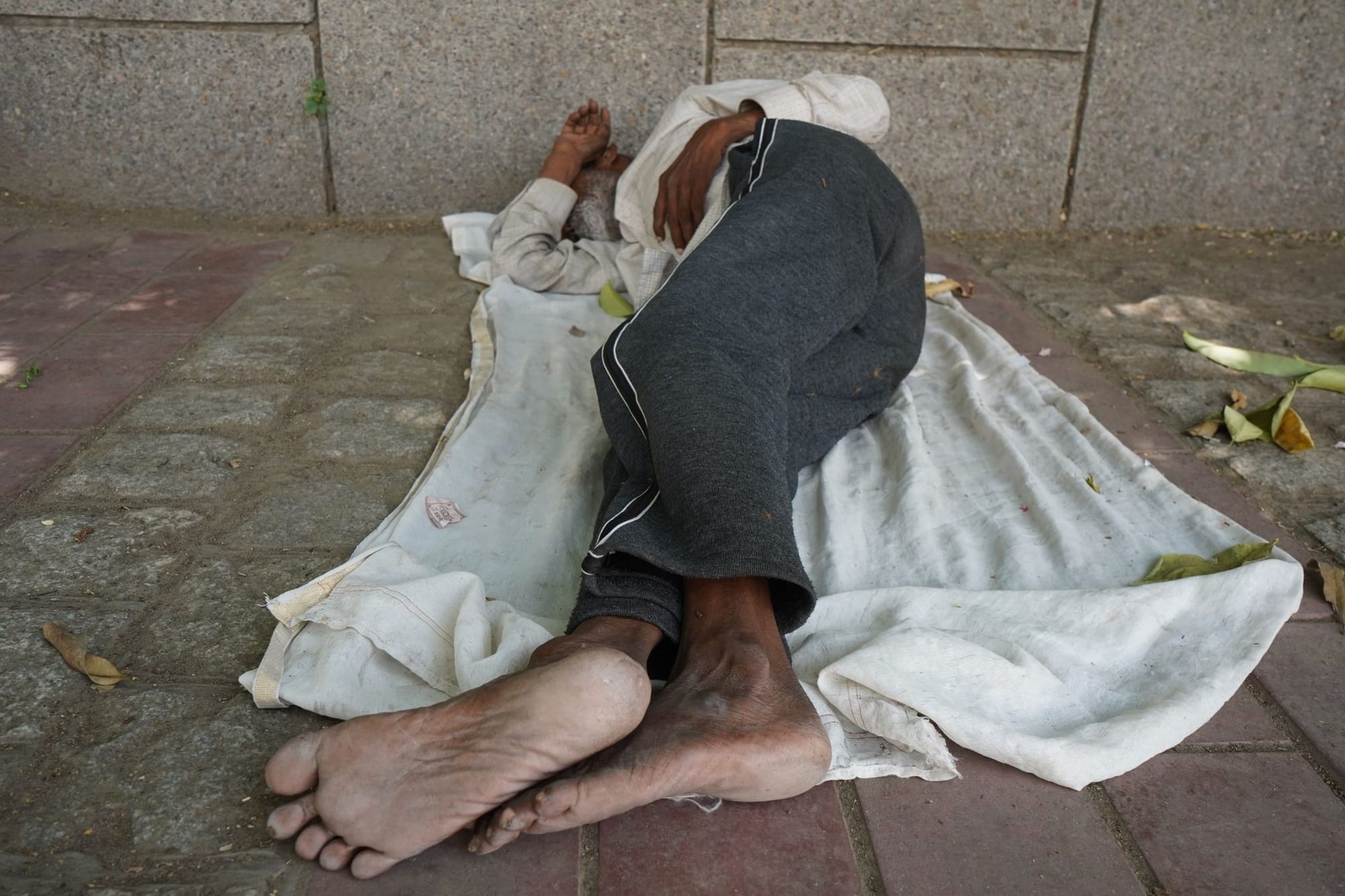
The developers Dunia contacted for this story did not respond to requests for comment. This silence is itself a statement. The construction industry operates through a chain of subcontracting that insulates the main developer from responsibility. The big names, the ones whose brands sell the luxury apartments, rarely employ workers directly. They hire contractors, who hire subcontractors, who in turn hire labourers. When a worker falls from scaffolding or dies of heatstroke, the liability dissolves in this chain. The brand remains untarnished, and the tower keeps rising.
Delhi Housing Policy Favors Investors Over Residents
Dr. Sahil Sharma, an urban housing expert, explained that Delhi’s housing policy has always prioritized ownership over rental housing. “This ideological bias, combined with rising land prices, has created a market that serves investors rather than residents,” Sharma said.
Between 2020 and 2024, property prices in India grew at an annual rate of 9.3 percent while household incomes rose by only 5.4 percent. The gap widens every year. The supply of affordable homes, defined as those priced below INR 10 million, has declined by 36 percent in just two years.
Sharma noted that the current affordable rental housing complex scheme is a step in the right direction but remains inadequate.
“The existing hostels accommodate only a fraction of the need,” he explains. “Most migrant workers continue to rely on the informal market, where they pay rents that consume 30-40 percent of their income for housing that fails basic habitability standards.”
Belonging Nowhere: Neither Home Nor Delhi
Ramesh, after his shift ended, revealed the psychological toll of this exclusion.
We sat on empty cement bags near the construction site. He rolled a beedi and talked about his village. He has a solid brick house there, built with his remittances over five years. It has three rooms, a courtyard, and a hand pump. His children attend the government school, while his wife grows vegetables. That house is his only asset, security, and proof that his years in Delhi have meant something.
But the village is not home anymore. He has been away too long. His children call him uncle when he visits. His wife manages everything without him. He is a stranger in his own house, yet he can never belong to Delhi. He builds its future while having no stake in it.
When asked if he could imagine owning a home in Delhi, he was silent for a long time, then said, “I built these towers. I know how strong the foundation is, how thick the walls are. I know every apartment will have marble and granite and imported fittings. But I also know that if I try to enter through the main gate after this building is finished, the security guard will stop me. He will ask for my name and flat number. He will know I do not belong. So where would I live? In the servant quarters? In the parking basement? There is no place for me here except the place I am already in.”
He gestured toward his tin shed, where the generator had just started, powering a single bulb. Other workers were returning, carrying plastic bags with vegetables and bread. Someone was cooking on a kerosene stove outside. The smell of dal and onions mixed with cement dust. In the distance, the tower cranes were silhouetted against the darkening sky, their lights blinking like warning signals.
The construction workers who build Delhi’s luxury towers are simply asking for a room with a solid roof, clean water, and the right to remain in the city they serve.
Until then, Ramesh keeps moving. One tower ends, another begins. A new site, a tin shed, a temporary address. He sends money home, builds homes for others, and measures life in daily wages and monthly remittances.
At the age of 34, he has lived in seventeen places. He expects at least seventeen more moves before his body gives in and he returns to Bihar.
The towers he leaves behind will stand for decades. Families will live in them without knowing his name. Their value will rise, creating wealth for investors far removed from the labour beneath.
And somewhere in the city, in another tin shed, another young man from Bihar will rise before dawn, wash his face, and start building the next invisible home for someone else’s dream.
More from the series | Housing in Asia
Prologue – Asian Cities’ Unaffordable Housing Equation
Part 1. – Jakarta’s Impossible Home, What Housing Really Costs in Indonesia’s Capital
Part 2. – Jakarta's USD 18,800/m² District Gets a Housing Experiment
Part 3. – The Invisible City: Life Beneath Delhi’s Rising Skyline
Reporting Bilal Handoo
Bilal Handoo is a Delhi-based senior journalist and editor with over 15 years of experience across South Asia. He has worked with leading media organisations, holding key editorial and mentorship roles across newsrooms.
Photos Kamran Yousuf
Editing Seulki Lee – skidolma@thedunia.org